
1. Introduction to Digital Marketing
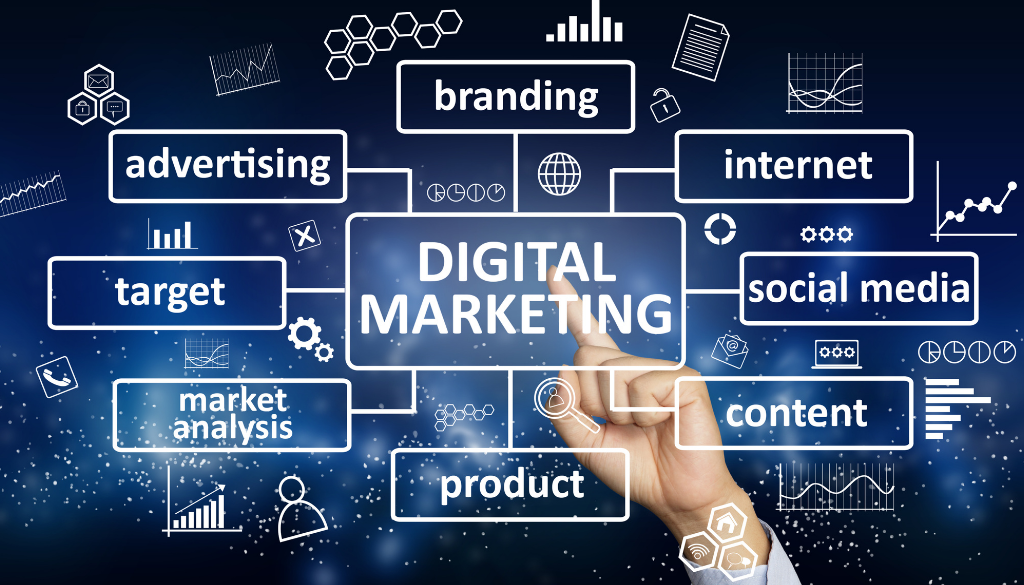
Digital marketing refers to the promotion of products, services, or brands using digital platforms such as the internet, mobile devices, search engines, and social media. In today’s business environment, digital marketing has become an essential part of growth and survival, especially for small and medium enterprises (SMEs). As customers increasingly rely on digital platforms to search for information, compare options, and make purchase decisions, businesses must establish a strong digital presence to remain competitive.
Unlike traditional marketing methods such as newspapers, banners, or television advertisements, digital marketing allows businesses to reach their target audience more directly and efficiently. Digital platforms provide businesses with the ability to communicate with customers in real time, personalize messages, and adjust strategies based on performance. For SMEs, this is particularly valuable because digital marketing offers cost-effective solutions that can be implemented even with limited budgets.
Digital marketing includes various activities such as website marketing, social media marketing, search engine optimization (SEO), email marketing, and online advertising. These activities work together to create awareness, attract potential customers, convert them into buyers, and build long-term relationships. Instead of relying on a single channel, digital marketing focuses on creating an integrated online presence that supports business goals.
One of the key advantages of digital marketing is measurability. Businesses can track metrics such as website visits, engagement, leads, and sales in real time. This allows SMEs to understand what is working and what is not, enabling data-driven decision-making. Traditional marketing often lacks this level of transparency, making it difficult to evaluate return on investment.
Digital marketing also enables two-way communication between businesses and customers. Through social media comments, messages, reviews, and emails, customers can interact directly with brands. This interaction helps businesses understand customer needs, build trust, and improve services.
2. Difference Between Digital Marketing and Traditional Marketing
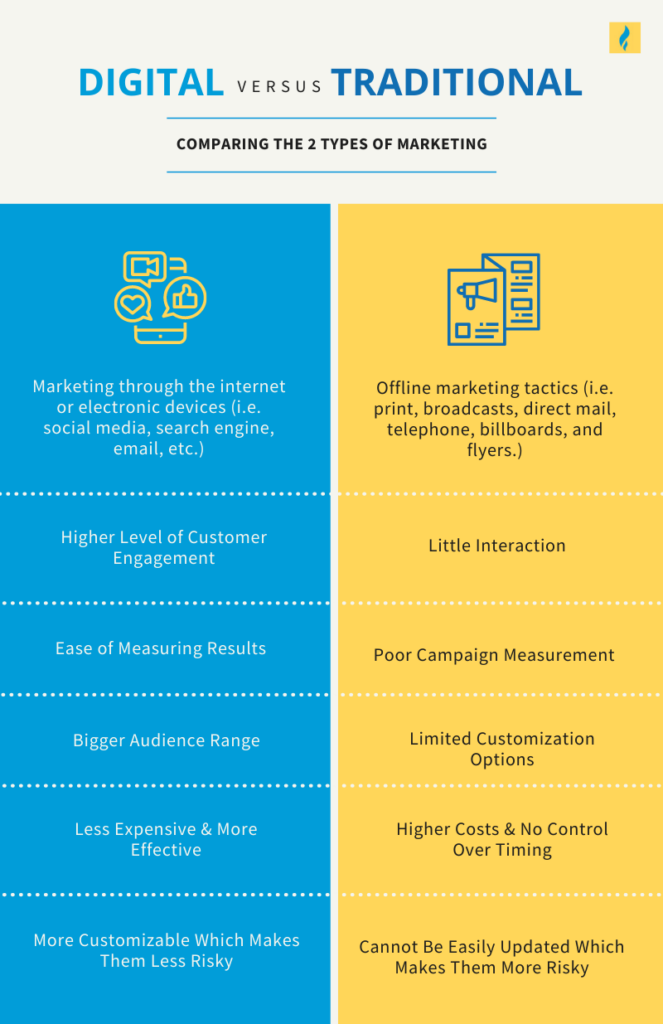
Digital marketing and traditional marketing are two approaches used by businesses to promote products and services. Traditional marketing includes offline methods such as newspapers, television, radio, banners, and pamphlets, whereas digital marketing uses online platforms like websites, social media, search engines, and email. Although both aim to increase visibility and sales, they differ in execution, cost, interaction, and measurement.
One major difference is the mode of communication. Traditional marketing is mostly one-way, where businesses share messages but customers have limited ability to respond immediately. Digital marketing enables two-way communication, allowing customers to interact through comments, messages, reviews, and emails. This interaction helps SMEs build stronger relationships and trust with customers.
Another key difference is cost and flexibility. Traditional marketing methods are often expensive and less flexible, making them difficult for SMEs to afford or modify once published. Digital marketing is more cost-effective and flexible, allowing SMEs to start with minimal investment and adjust campaigns easily based on performance and budget.
Performance measurement also differs significantly. Traditional marketing results are difficult to measure accurately and often rely on assumptions. Digital marketing provides measurable data such as website traffic, engagement, leads, and conversions. This helps SMEs analyze performance and make informed, data-driven decisions.
Digital marketing is also faster and more adaptable. Traditional campaigns require more time to plan and cannot be changed easily once launched. Digital campaigns can be created, modified, or stopped quickly, enabling SMEs to respond to customer behavior and market changes.
In addition, digital marketing allows better targeting and personalization. Traditional marketing targets a broad audience, while digital marketing enables targeting based on location, age, interests, and behavior. This improves relevance and increases the chances of conversion.
Overall, traditional marketing focuses on offline promotion with limited interaction and measurability, whereas digital marketing offers interactive, flexible, and cost-effective promotion. For SMEs, digital marketing provides greater control, reach, and growth opportunities in today’s digital environment.
3. Why Digital Marketing is Important for SMEs
Small and medium enterprises (SMEs) operate with limited budgets, small teams, and increasing competition. In such conditions, digital marketing becomes a powerful tool that helps SMEs reach customers, build brand visibility, and grow their business efficiently. Unlike traditional marketing methods, digital marketing allows businesses to promote their products and services in a cost-effective and measurable manner.
Digital marketing is important for SMEs for the following reasons:
Cost-effectiveness:
Traditional advertising methods such as newspapers, hoardings, and television advertisements are often expensive and not affordable for many SMEs. Digital marketing provides access to free or low-cost platforms such as social media, websites, and email marketing. Even paid digital campaigns can be run with small budgets and adjusted according to performance.
Targeted audience reach:
Digital marketing allows SMEs to target specific customer groups based on factors such as location, age, interests, and online behavior. This ensures that marketing efforts are directed toward potential customers who are more likely to be interested in the business, reducing wastage and improving conversion rates.
Measurable results and control:
One of the major advantages of digital marketing is the ability to track performance in real time. SMEs can monitor website traffic, social media engagement, leads, and sales using analytics tools. This helps businesses understand what strategies are working and make data-driven decisions.
Customer interaction and relationship building:
Digital marketing enables two-way communication between businesses and customers. Through comments, messages, reviews, and emails, SMEs can interact directly with their audience. This interaction helps build trust, improve customer experience, and strengthen long-term relationships.
Ability to compete with larger businesses:
Digital marketing provides SMEs with an opportunity to compete with larger organizations without requiring large marketing budgets. By using creative content, consistent posting, and smart targeting, small businesses can build a strong online presence and attract customers effectively.
In conclusion, digital marketing is important for SMEs because it is affordable, targeted, measurable, and interactive. It enables small businesses to reach the right audience, understand customer behavior, and grow sustainably in a digital-first business environment.
4. Types of Digital Marketing
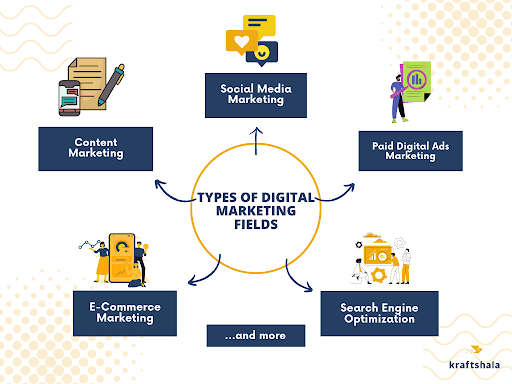
Digital marketing is not a single activity but a combination of multiple online strategies used together to promote a business. Each type of digital marketing serves a specific purpose, such as increasing visibility, attracting traffic, generating leads, or building customer relationships. SMEs do not need to use all types at once; instead, they should understand each type and select the ones that best align with their business goals, budget, and target audience.
The major types of digital marketing are explained below.
1. Search Engine Optimization (SEO)
Search Engine Optimization refers to the process of improving a website’s visibility on search engines such as Google. When users search for products or services online, SEO helps a business appear higher in search results. For SMEs, SEO is important because it brings organic (non-paid) traffic over the long term.
SEO focuses on optimizing website content, keywords, page structure, loading speed, and local listings. Although SEO takes time to show results, it is cost-effective and helps build credibility and trust among customers.
2. Social Media Marketing
Social media marketing involves promoting a business through platforms such as Instagram, Facebook, LinkedIn, and YouTube. It helps SMEs connect directly with their audience, share content, promote products or services, and build brand awareness.
This type of marketing focuses on regular posting, engagement with followers, responding to comments and messages, and creating visual and interactive content. Social media marketing is especially useful for SMEs because it allows promotion at low or no cost and supports two-way communication with customers.
3. Content Marketing
Content marketing focuses on creating and sharing valuable and relevant content to attract and engage customers. This content may include blogs, articles, videos, infographics, reels, and educational posts.
Instead of directly selling products, content marketing aims to inform, educate, and build trust with the audience. For SMEs, content marketing helps establish authority, improve SEO performance, and support other digital marketing activities such as social media and email marketing.
4. Email Marketing
Email marketing is the process of communicating with customers through emails. It is commonly used to send welcome messages, promotional offers, updates, newsletters, and follow-up emails.
For SMEs, email marketing is one of the most cost-effective digital marketing methods. It helps maintain long-term relationships with customers, encourage repeat purchases, and nurture leads. Email marketing also allows personalization, which improves engagement and response rates.
5. Search Engine Marketing (Paid Ads)
Search Engine Marketing (SEM) refers to paid advertising on search engines, such as Google Ads. Businesses pay to display their ads when users search for specific keywords.
This type of digital marketing provides quick visibility and immediate traffic. SMEs often use paid ads for promotions, product launches, or time-sensitive campaigns. While it requires budget planning, SEM allows precise targeting and measurable results.
6. Affiliate Marketing
Affiliate marketing involves promoting products or services through third-party partners known as affiliates. Affiliates earn a commission for each sale or lead generated through their referral.
For SMEs, affiliate marketing helps expand reach without upfront advertising costs. It is performance-based, meaning businesses pay only when results are achieved. This makes it a low-risk marketing option.
7. Influencer Marketing
Influencer marketing involves collaborating with individuals who have a strong following on social media platforms. Influencers promote products or services to their audience, helping businesses reach potential customers through trusted voices.
SMEs often work with micro-influencers who have smaller but highly engaged audiences. This type of marketing helps build trust and visibility, especially for lifestyle, fashion, food, and service-based businesses.
8. Mobile Marketing
Mobile marketing focuses on reaching customers through mobile devices. This includes SMS marketing, mobile-friendly websites, app-based notifications, and location-based promotions.
Since most users access digital platforms through smartphones, mobile marketing is important for SMEs to ensure accessibility and convenience. A mobile-optimized digital presence improves user experience and engagement.
9. Online Reputation Management
Online reputation management involves managing customer reviews, ratings, and feedback on platforms such as Google Business Profile and social media. Positive reviews improve trust and influence customer decisions.
For SMEs, maintaining a good online reputation is crucial because customers often rely on reviews before choosing a business. Responding to reviews and feedback helps improve credibility and customer relationships.
5. Digital Marketing Channels Explained
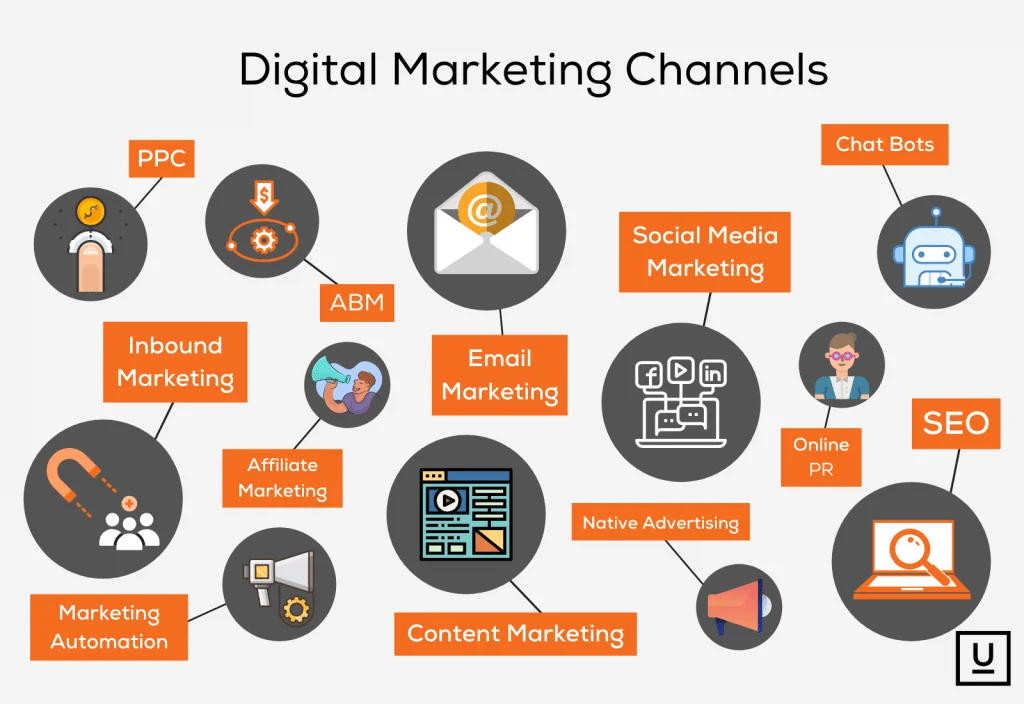
Digital marketing channels are the platforms and mediums through which businesses communicate with their target audience online. Each channel serves a specific purpose in the customer journey, such as creating awareness, generating interest, converting leads, or retaining customers. For SMEs, understanding digital marketing channels is important because choosing the right channels helps optimize effort, budget, and results.
Instead of using all channels at once, SMEs should understand how each channel works and how it supports business goals. The major digital marketing channels are explained below.
1. Website as a Digital Marketing Channel
A website is the foundation of digital marketing. It acts as the central hub where all other digital marketing activities lead customers. Through a website, businesses can showcase products or services, share information, collect leads, and build credibility.
For SMEs, a website provides complete control over content and branding. It also supports other channels such as SEO, paid ads, and email marketing. A well-structured, mobile-friendly, and fast-loading website improves user experience and increases the chances of conversion.
2. Search Engines
Search engines such as Google are one of the most important digital marketing channels. Customers actively use search engines to find solutions, compare options, and make purchase decisions. Appearing on search engines through SEO or paid ads helps businesses reach users with high intent.
For SMEs, search engines are valuable because they connect businesses with customers who are already searching for related products or services. This makes search engine traffic more likely to convert compared to random promotion.
3. Social Media Platforms
Social media platforms like Instagram, Facebook, LinkedIn, and YouTube are widely used digital marketing channels for customer engagement and brand building. These platforms allow businesses to share content, promote offers, interact with customers, and build online communities.
For SMEs, social media channels are cost-effective and interactive. They support two-way communication and help businesses understand customer preferences through comments, messages, and engagement patterns.
4. Email as a Marketing Channel
Email marketing is a direct communication channel used to connect with customers who have shown interest in a business. Emails are commonly used for sending updates, offers, newsletters, and follow-up communication.
For SMEs, email marketing is effective for building long-term relationships and encouraging repeat purchases. It allows personalization and targeted communication, making it one of the most reliable digital marketing channels.
5. Online Advertising Platforms
Online advertising platforms such as Google Ads and social media ads allow businesses to promote content to specific audiences. These platforms support targeting based on location, age, interests, and behavior.
SMEs often use online advertising channels for quick visibility, promotions, and lead generation. Although paid ads require budget planning, they provide measurable results and flexible control over campaigns.
6. Content Platforms
Content platforms include blogs, video platforms, and content-sharing websites. Through content platforms, businesses educate customers, share expertise, and build trust over time.
For SMEs, content platforms support long-term growth by improving SEO, increasing engagement, and establishing authority in their niche. Content created for these platforms can also be reused across social media and email marketing.
7. Messaging and Communication Channels
Messaging channels such as WhatsApp, chat widgets, and direct messages on social media are increasingly important for customer communication. These channels allow instant interaction and quick response.
For SMEs, messaging channels improve customer experience and support faster decision-making. Prompt communication helps build trust and increases the chances of conversion.
8. Online Marketplaces and Listings
Online marketplaces and business listing platforms such as Google Business Profile act as digital discovery channels. Customers often search for local businesses through these platforms before making contact.
For SMEs, maintaining updated listings improves visibility, credibility, and local reach. Reviews and ratings on these platforms strongly influence customer decisions.
6. Digital Marketing Funnel (Beginner View)
The digital marketing funnel explains the journey a customer follows from first discovering a business to finally making a purchase and becoming a loyal customer. It helps businesses understand how customers move step by step through different stages before taking action. For SMEs, understanding the digital marketing funnel is important because it helps plan marketing activities in a structured way instead of promoting randomly.
The funnel is called a “funnel” because many people enter at the top, but only some of them move down to become customers. Digital marketing strategies are designed to guide potential customers smoothly through each stage of this funnel.
1. Awareness Stage
The awareness stage is the top of the digital marketing funnel. At this stage, customers become aware of a business, product, or service for the first time. They may not be actively looking to buy but are discovering options through digital platforms.
For SMEs, awareness is created using channels such as social media posts, search engine results, online ads, blogs, and videos. The goal at this stage is not to sell but to introduce the business and grab attention. Good content, visibility, and consistency help attract potential customers into the funnel.
2. Interest Stage
In the interest stage, customers start showing interest in the business after becoming aware of it. They may visit the website, follow social media pages, read posts, or explore products and services.
At this stage, SMEs should focus on providing useful and engaging information. Content such as detailed posts, product explanations, educational blogs, and short videos helps customers understand what the business offers. The objective is to keep customers interested and encourage them to learn more.
3. Consideration Stage
The consideration stage is where customers compare options and evaluate whether the business meets their needs. They may compare prices, read reviews, check testimonials, or look at competitors.
For SMEs, this stage is very important because customers are close to making a decision. Strategies such as customer reviews, case studies, email follow-ups, FAQs, and clear product information help build trust. Businesses should highlight benefits, value, and credibility to stand out from competitors.
4. Conversion Stage
The conversion stage is where the customer takes action. This action could be making a purchase, filling out a contact form, signing up for a service, or booking an appointment.
At this stage, SMEs should make the process simple and smooth. Clear calls-to-action, easy checkout processes, discounts, and responsive communication help increase conversions. Any confusion or delay at this stage may result in lost customers.
5. Retention Stage
The funnel does not end after conversion. The retention stage focuses on maintaining relationships with existing customers and encouraging repeat purchases. Retaining customers is often more cost-effective than acquiring new ones.
SMEs can use email marketing, loyalty programs, follow-up messages, and customer support to stay connected. Good post-purchase experience increases satisfaction and long-term loyalty.
6. Advocacy Stage
In the advocacy stage, satisfied customers become promoters of the business. They recommend products or services to others through reviews, referrals, and social media sharing.
For SMEs, this stage helps generate organic growth. Encouraging reviews, testimonials, and referrals helps attract new customers into the awareness stage, completing the funnel cycle.
Importance of the Digital Marketing Funnel for SMEs
The digital marketing funnel helps SMEs understand customer behavior and plan marketing activities at each stage. Instead of focusing only on selling, businesses learn how to attract, nurture, convert, and retain customers. This structured approach improves efficiency, reduces wasted effort, and increases long-term growth.
7. Role of Digital Marketing in Business Growth
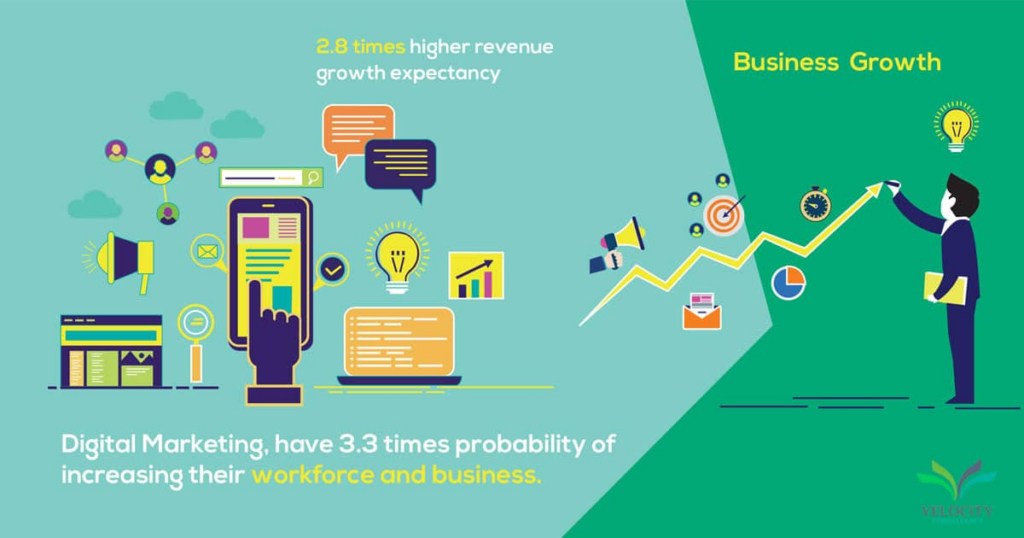
Digital marketing plays a vital role in supporting business growth, especially for small and medium enterprises. Growth is not limited to sales alone; it also includes brand visibility, customer trust, market reach, and long-term sustainability. Digital marketing helps businesses grow by connecting them with customers in a structured, measurable, and scalable manner.
One of the key roles of digital marketing in business growth is increasing visibility and reach. Through digital platforms such as search engines and social media, businesses can reach a larger audience beyond physical boundaries. SMEs can promote their offerings to local as well as wider audiences without large investments, which was not possible with traditional marketing alone.
Digital marketing also supports customer acquisition and lead generation. By using targeted campaigns, SEO, and content marketing, businesses attract potential customers who are actively searching for products or services. This improves the quality of leads and increases the chances of conversion, contributing directly to business growth.
Another important role of digital marketing is building trust and brand credibility. Regular online presence, informative content, customer reviews, and engagement help businesses establish reliability. For SMEs, trust is a major factor in growth, as customers often choose businesses they feel confident interacting with online.
Digital marketing enables data-driven decision-making, which is essential for sustainable growth. Businesses can track performance metrics such as traffic, engagement, leads, and sales. This data helps identify successful strategies and areas for improvement, allowing SMEs to optimize efforts and avoid unnecessary spending.
Finally, digital marketing supports long-term customer relationships and retention. By staying connected with customers through emails, social media, and messaging platforms, businesses encourage repeat purchases and referrals. Strong customer relationships contribute to consistent revenue and long-term growth.
8.Application of Digital Marketing in SME Business Models
<a href=”https://www.freepik.com/free-vector/digital-marketing-service-isometric-concept-with-various-electronic-devices-woman-work-3d-vector-illustration_6931230.htm”>Image by macrovector on Freepik</a>
Dight strategies based on their business model rather than using a one-size-fits-all approach.
For product-based SMEs, such as local retailers or small eCommerce businesses, digital marketing is primarily used to increase visibility, attract traffic, and drive sales. Websites, social media platforms, and search engines act as key channels to showcase products, highlight offers, and convert visitors into customers. Digital marketing enables these businesses to reach customers beyond physical locations, track buying behavior, and improve conversion rates through data-driven decisions.
In service-based SME models, such as coaching institutes, consultants, or service providers, digital marketing focuses more on lead generation, trust-building, and relationship management. Platforms like social media, search engines, and email marketing help educate potential customers, communicate expertise, and nurture leads over time. Digital marketing allows service-based SMEs to demonstrate value before a customer commits, which is essential for high-consideration services.
For local SMEs, including restaurants, salons, and repair services, digital marketing supports local visibility and customer engagement. Tools such as Google Business Profile, local SEO, social media updates, and online reviews help these businesses attract nearby customers. Digital marketing enables local SMEs to stay visible during customer decision-making moments and build trust through ratings and feedback.
Subscription-based and education-focused SMEs use digital marketing to maintain continuous engagement and retention. Email marketing, content marketing, and social media communication are applied to keep customers informed, engaged, and loyal. Digital marketing helps these businesses reduce customer drop-off and increase lifetime value through consistent communication.
Across all SME business models, digital marketing allows flexibility and scalability. SMEs can start with basic digital activities such as social media presence or a simple website and gradually expand to SEO, email marketing, and paid campaigns as the business grows. This adaptability makes digital marketing suitable for SMEs at different growth stages.
In summary, digital marketing supports SME business models by aligning marketing efforts with business objectives, customer behavior, and available resources. Whether the SME is product-based, service-based, local, or education-focused, digital marketing provides practical tools to attract customers, build trust, and support sustainable growth.
9.Common Misconceptions About Digital Marketing

<a href=”https://www.freepik.com/free-photo/brunet-man-sitting-desk-surrounded-with-gadgets-papers_13556692.htm”>Image by wayhomestudio on Freepik</a>
Digital marketing is widely used today, yet many small and medium enterprises still have misconceptions about how it works and who it is meant for. These misconceptions often prevent SMEs from adopting digital marketing or cause them to use it incorrectly. Understanding and clearing these misunderstandings is important for SMEs to use digital marketing effectively and with confidence.
Some of the most common misconceptions about digital marketing are explained below.
Digital marketing is only for big companies:
A common belief is that digital marketing is suitable only for large companies with big budgets and dedicated teams. In reality, digital marketing is especially beneficial for SMEs because it offers affordable tools and flexible strategies. Small businesses can start with free platforms such as social media and gradually expand their digital presence without heavy investment.
Digital marketing is expensive:
Many SMEs assume that digital marketing requires high spending. While paid advertising exists, digital marketing also includes free or low-cost methods such as content creation, social media posting, email marketing, and SEO. Compared to traditional marketing, digital marketing provides better control over spending and allows businesses to scale campaigns based on budget and performance.
Digital marketing requires technical knowledge:
Another misconception is that digital marketing is highly technical and difficult to understand. While some advanced tools require learning, basic digital marketing activities can be managed easily by beginners. Platforms are designed to be user-friendly, and SMEs can learn gradually through practice without technical backgrounds.
Digital marketing gives instant results:
Some businesses expect immediate sales after starting digital marketing. In reality, digital marketing is a long-term process. While paid ads may give quick visibility, organic methods such as SEO and content marketing take time to show results. Consistency and patience are required to achieve sustainable growth.
Posting on social media is enough:
Many SMEs believe that simply posting on social media is sufficient for digital marketing. Digital marketing involves multiple channels working together, including websites, search engines, email, and analytics. Relying on only one channel limits growth and effectiveness.
Digital marketing does not work for local businesses:
Local SMEs often assume that digital marketing is only useful for online businesses. However, digital marketing is highly effective for local businesses through tools such as Google Business Profile, local SEO, and online reviews. These tools help local customers find nearby businesses easily.
In conclusion, digital marketing is often misunderstood due to lack of awareness and experience. By understanding the reality behind these misconceptions, SMEs can approach digital marketing with the right expectations and use it as a powerful tool for business growth.
10.Essential Digital Marketing Tools for SMEs (Beginner-Friendly)
<a href=”https://www.freepik.com/free-vector/marketing-background-with-tools-icons_988760.htm”>Image by freepik</a>
Digital marketing does not require expensive software or advanced technical tools, especially for small and medium enterprises. Many beginner-friendly and free tools are available that allow SMEs to start digital marketing effectively. These tools help businesses create content, manage online presence, communicate with customers, and track performance. Understanding and using the right tools enables SMEs to work efficiently with limited resources.
The essential digital marketing tools for SMEs are explained below.
Google Docs and Google Drive:
Google Docs is widely used for content writing, planning, and documentation. SMEs can use it to write captions, blogs, email drafts, and marketing plans. Google Drive helps store files securely and allows easy sharing and collaboration. These tools are useful for organizing marketing work without any cost.
Canva (Free Version):
Canva is a beginner-friendly design tool used to create social media posts, banners, posters, and basic marketing visuals. SMEs can design professional-looking content without graphic design skills. Canva provides ready-made templates that save time and maintain visual consistency.
Google Business Profile:
Google Business Profile is an essential tool for local SMEs. It helps businesses appear in Google search results and Google Maps. SMEs can display business details, location, photos, and customer reviews. This tool improves local visibility and helps customers find and trust the business easily.
Social Media Platforms:
Platforms such as Instagram, Facebook, LinkedIn, and YouTube act as both marketing channels and tools. SMEs can use them to post content, engage with customers, promote products or services, and build brand awareness. These platforms are free to use and highly effective for reaching target audiences.
Email Tools (Gmail and Basic Email Platforms):
Email tools such as Gmail are useful for sending basic email communication, newsletters, and follow-ups. SMEs can manage customer communication and maintain relationships through email without investing in paid software at the beginning stage.
Google Analytics:
Google Analytics is a free tool used to track website performance. It provides information about website visitors, traffic sources, and user behavior. For SMEs, this tool helps understand how customers interact with the website and supports data-driven decision-making.
Google Search Console:
Google Search Console helps SMEs monitor website visibility on search engines. It provides insights into search performance, keywords, and website issues. This tool supports SEO efforts and helps improve search rankings over time.
ChatGPT and AI Writing Tools (Free Versions):
AI tools like ChatGPT help SMEs generate content ideas, draft captions, write emails, and create basic marketing content. These tools save time and support consistency when used responsibly and reviewed by humans.
11.Key Takeaways
Digital marketing is an essential foundation for small and medium enterprises in today’s digitally driven business environment. It enables SMEs to promote their products and services using online platforms in a cost-effective, measurable, and flexible manner. Unlike traditional marketing, digital marketing allows businesses to reach the right audience, interact with customers, and adjust strategies based on real-time performance.
One of the key takeaways from this module is that digital marketing is not limited to large companies or high budgets. SMEs and startups can begin digital marketing using free or beginner-friendly tools and gradually expand their efforts as the business grows. Understanding the basics of digital marketing helps SMEs avoid random promotion and instead adopt a structured and goal-oriented approach.
This module also highlights that digital marketing consists of multiple types and channels, each serving a specific purpose in the customer journey. By selecting suitable channels and combining them strategically, SMEs can improve visibility, generate leads, convert customers, and build long-term relationships.
Another important takeaway is the role of data and measurability in digital marketing. Tracking performance helps SMEs understand customer behavior, evaluate results, and make informed decisions. This reduces guesswork and improves marketing efficiency.
Overall, this module builds a strong conceptual foundation for digital marketing. It prepares SMEs to confidently move forward to advanced topics such as social media marketing, SEO, email marketing, performance tracking, and the practical use of digital tools covered in the upcoming modules.
12.Module Summary
This module introduced the fundamental concepts of digital marketing in a simple and beginner-friendly manner, with a specific focus on small and medium enterprises and startups. It explained what digital marketing is, how it differs from traditional marketing, and why it is important for SMEs operating in a competitive and digital-first business environment.
The module covered the major types of digital marketing, key digital marketing channels, and the digital marketing funnel to help learners understand how customers move from awareness to conversion and retention. It also highlighted the role of digital marketing in business growth and demonstrated how digital marketing can be applied across different SME business models.
Additionally, the module addressed common misconceptions about digital marketing and introduced essential beginner-friendly tools that SMEs can use to start their digital marketing journey confidently. By the end of this module, learners gain a clear understanding of how digital marketing works as a system rather than as isolated activities.
Overall, this module establishes a strong foundation for the course and prepares SMEs to explore practical implementation of digital marketing strategies in the upcoming modules, including social media marketing, search engine optimization, email marketing, performance tracking, and the use of digital tools.

