
Turning Data into Action with Pixel Codes
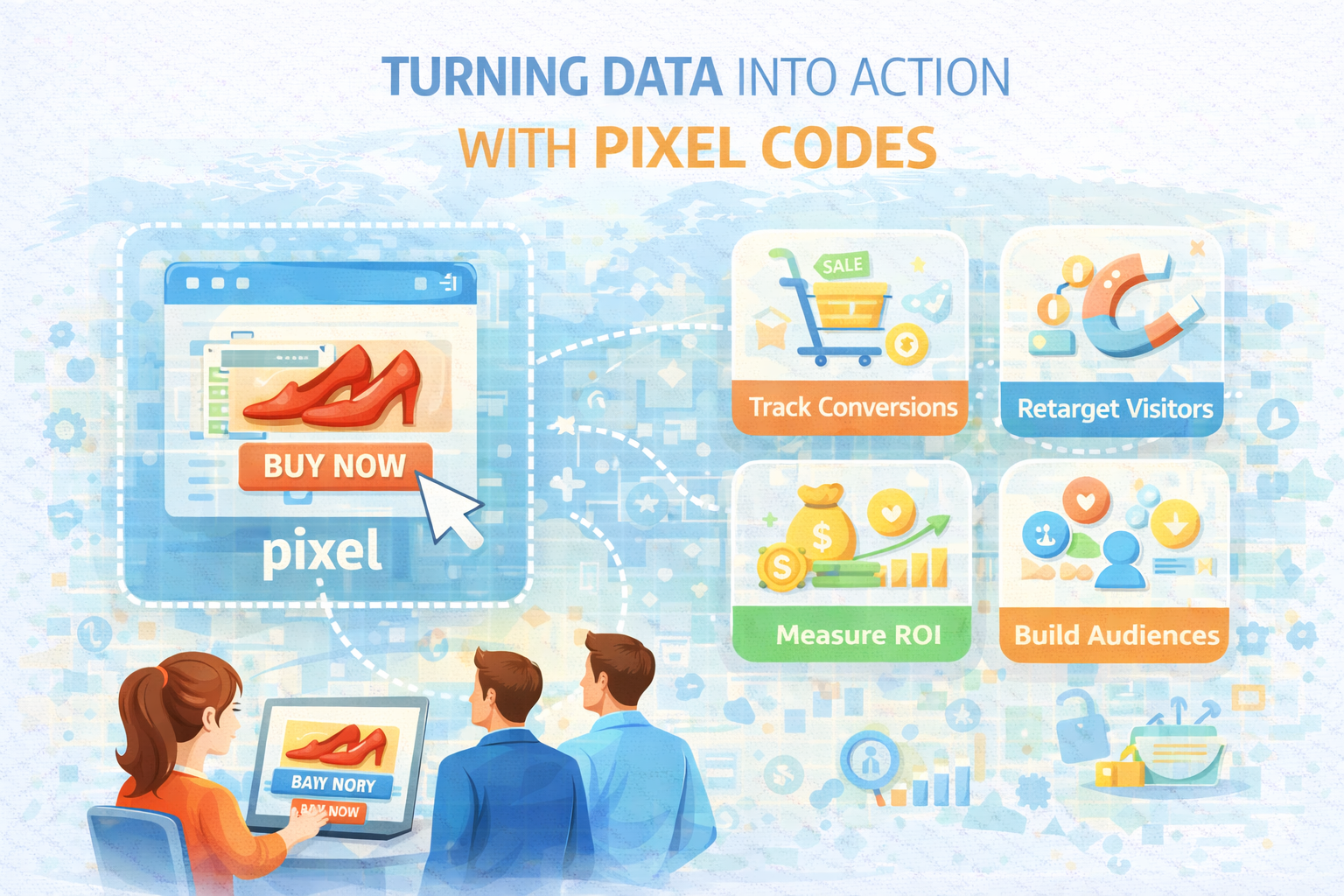
Every marketer knows that data is powerful — but raw data on its own doesn’t drive results. The real advantage comes when you convert that data into actionable insights that improve targeting, personalization, and campaign performance.
Pixel codes are one of the most effective tools for doing just that. By capturing user behavior across your website or app, pixel codes help you understand intent, measure conversions, refine audiences, and optimize campaigns with precision. This makes them foundational to any data-driven digital marketing strategy.
In this article, we’ll walk through what pixels are, how they work, why they’re critical for modern advertising, and how you can use them to turn data into real marketing impact.
What Are Pixel Codes?
Pixel codes are small pieces of JavaScript or tracking snippets that are placed on your website or within your app. When a user loads a page with a pixel embedded, data about that visit is sent back to a connected analytics or advertising platform.
Think of pixels as sensors that record meaningful actions — such as page views, button clicks, form submissions, and purchases. Because they can track nuanced behavior, pixels provide insights that go far beyond basic visits or clicks.
The data they gather becomes the foundation for:
- Audience segmentation
- Conversion tracking
- Retargeting audiences
- Attribution insights
- Performance optimization
Essentially, pixel codes translate user actions into data signals that marketers can act on.
Why Pixel Codes Matter for Marketers
In today’s marketing landscape, where competition for attention is fierce and privacy standards are evolving, relying on generic reach and impressions is no longer enough.
Pixel codes matter because they bridge the gap between visibility and understanding. Instead of simply seeing that users visited your site, you can know what they did, how they behaved, and what they’re likely to do next.
This level of insight enables:
- Smarter audience targeting
- Personalized messaging
- Better budget allocation
- More accurate attribution
- Higher conversion rates
Without pixel-based data, marketers are left guessing. With it, decisions are grounded in real behavior.
How Pixel Codes Work
Pixel codes operate by listening for specific events and recording those interactions when they happen.
When a user loads a page with a pixel, the code executes — sending a signal back to the platform that owns the pixel. These signals can represent simple actions, like visiting a homepage, or complex ones, like completing a purchase.
Here’s a simplified breakdown:
- Placement: A pixel is installed on your site or app via a tag manager or direct code insertion.
- Triggering: When a user performs an action (like viewing a page), the pixel fires.
- Data Capture: The pixel sends information — such as event type, page URL, and user identifiers — to the linked platform.
- Segmentation & Optimization: Platforms use this data to update audiences, track conversions, and inform automated optimization algorithms.
This continuous loop lets your marketing ecosystem stay responsive to evolving user behavior.
Types of Events Pixel Codes Track
Pixel codes can capture a wide range of user interactions, including:
- Basic page views
- Button clicks
- Lead form submissions
- Add-to-cart events
- Purchases
- Video plays
- Custom interactions set by marketers
By defining which events matter most to your business, you can shape how your pixel tracks behavior and drives downstream actions in your campaigns.
Practical Uses of Pixel Data
Pixel-driven data powers many valuable marketing activities:
Audience Creation and Retargeting
When users visit specific pages or take certain actions, you can automatically create audience segments for tailored campaigns.
For example, visitors who viewed high-value product pages but didn’t purchase can be retargeted with dynamic ads featuring those products.
Conversion Tracking and Attribution
Pixels let you measure how many conversions result from specific ads or channels. This helps determine which activities are truly driving business outcomes.
Personalized Experiences
Pixel data enables marketers to serve highly relevant content or offers to users based on prior interactions — such as recommending complementary products after a purchase.
Performance Optimization
Platforms use pixel-generated signals to adjust bids, refine delivery, and prioritize audience segments most likely to convert, making your ad spend more efficient.
Implementing Pixels: A Step-by-Step Overview
While pixel setup varies by platform, the basic process generally includes:
- Generate the Pixel Code: Obtain the snippet from your advertising or analytics platform.
- Insert the Pixel: Add it to your website’s header or through a tag management system like Google Tag Manager.
- Define Tracked Events: Identify which user interactions matter most (e.g., purchases, leads, signups).
- Verify Tracking: Test to ensure the pixel fires correctly on intended pages or actions.
- Build Audiences: Use pixel signals to create custom audiences for advertising campaigns.
- Monitor and Refine: Keep an eye on pixel performance and update events as needed.
Proper implementation ensures your data is accurate and actionable.
Best Practices for Pixel-Driven Marketing
To get the most out of pixel codes:
Use Clear Event Definitions: Define key actions consistently across platforms.
Maintain Data Quality: Regularly audit pixel performance to avoid missing signals.
Link to Business Outcomes: Only track events that tie to revenue or strategic goals.
Respect User Consent: Ensure compliance with privacy regulations and consent frameworks.
Coordinate Across Channels: Align pixel data with your broader analytics stack for holistic insights.
Following these practices increases the reliability of your pixel data and its value in decision-making.
Challenges and How to Address Them
Pixel tracking isn’t without its complexities. Marketers often encounter:
Data Gaps: Some signals may be lost if users opt out or block tracking — which requires fallback strategies like server-side tracking.
Implementation Errors: Misplaced pixels lead to flawed data; thorough testing is essential.
Privacy Constraints: With stricter regulations, marketers must balance data usage with transparent consent mechanisms.
Addressing these challenges proactively ensures more accurate tracking and preserves user trust.
How to Measure the Impact of Pixel Data
Pixel data enables deeper performance measurement beyond basic KPIs. Instead of just counting clicks and impressions, marketers can analyze:
- Conversion rate by audience segment
- Incremental lift attributable to specific user actions
- Cost per outcome for audiences defined by pixel behavior
- Cross-channel attribution pathways
These insights help teams understand not just what happened, but why it happened — guiding smarter optimization decisions.
The Future of Pixel Tracking in Advertising
As technology evolves and privacy norms shift, the role of pixel data will continue to change.
Emerging trends include:
Server-Side Tracking: Moving data collection away from browser-based scripts to servers for more stable and privacy-compliant signals.
Enhanced Identity Resolution: Combining pixel data with authenticated logged-in signals for better cross-device tracking.
AI-Assisted Insights: Using machine learning to interpret pixel data and suggest predictive audience segments.
These advancements will make pixel-driven marketing even more precise and impactful.
Conclusion: Turning Pixel Data Into Strategic Action
Pixel codes are more than technical snippets — they are the foundation of performance-driven marketing. By capturing nuanced user behavior, pixels empower marketers to build insightful audience segments, refine campaign delivery, and measure results with confidence.
In a digital landscape where data shapes strategy, pixels provide the visibility needed to turn observations into action. Brands that understand and leverage pixel data effectively can optimize experiences, improve efficiency, and ultimately drive stronger business outcomes.
Turning data into action isn’t an abstract goal — with pixel codes, it becomes a measurable, continuous practice that scales with your marketing efforts.
Recent posts
-
 Google AI Overview insights: what 9 months of referral data reveal about traffic, citations and visibility
 -
 Local SEO in the AI search era: what businesses need to optimize now
 -
 Agent Digital Marketing: The Complete Guide to Growing Your Business Online
 -
 Search Optimization Services: Grow Your Business with Better Google Rankings
 -
 What Is MEV on Solana? Understanding Validator Rewards, Distribution, and Their Role in Staking
 -
How Great Ecommerce Web Design Improves Customer Experience
-
YouTube Advertising: The Complete Guide to Growing Your Business in 2026
-
 What Is Website Development? A Complete Guide for Beginners (2026)
 -
 SEO Website Testing: The Complete Guide to Improving Rankings, Performance, and User Experience
 -
 SEO Mean: What SEO Means and Why It Matters in 2026

