
Google universal cart explained: How AI-powered shopping is changing Ecommerce visibility
Key Takeaways
- Google Universal Cart is an AI-powered shopping experience designed to help users compare, save, monitor, and purchase products across Google’s ecosystem.
- The feature integrates Google Search, Gemini, YouTube, Gmail, and Google Wallet into a unified shopping journey.
- Shoppers can track price drops, monitor inventory changes, compare products, and receive personalized purchase recommendations.
- Universal Cart signals the growth of zero-click commerce and answer-driven commerce.
- Product feeds, structured data, reviews, and product page quality will become increasingly important.
- Ecommerce visibility is evolving from rankings to recommendations.
- Businesses that prepare early can improve visibility across both traditional search and AI-powered shopping experiences.
At a glance
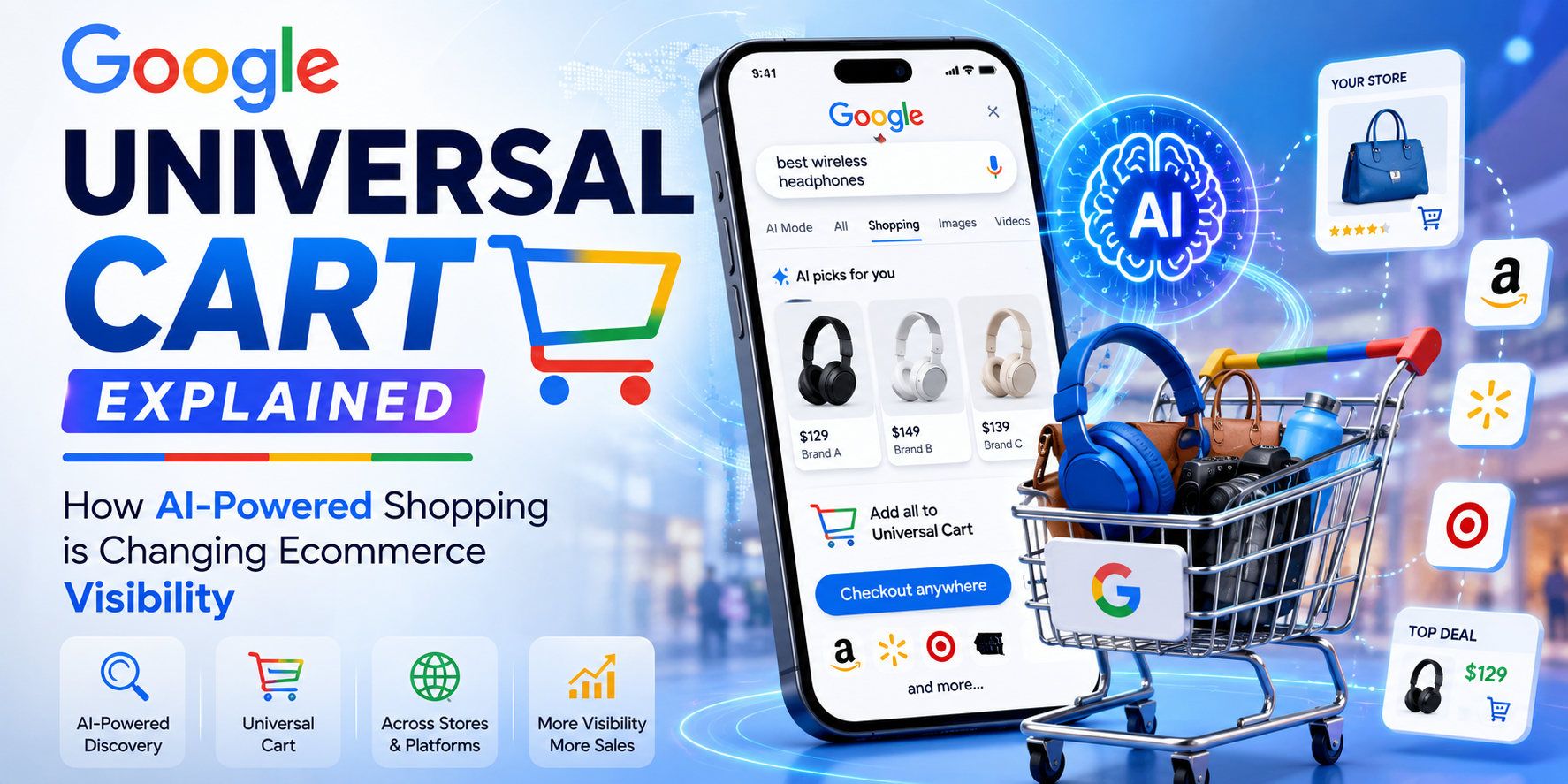
Google Universal Cart is Google’s new AI-powered shopping experience that allows consumers to discover, compare, save, monitor, and purchase products across Search, Gemini, YouTube, Gmail, and Google Wallet.
For ecommerce brands, the bigger story is visibility.
As AI-powered shopping grows, product discovery may increasingly happen through recommendations, comparisons, and answer-driven experiences before customers visit a website.
Businesses that invest in product feeds, structured data, reviews, product page quality, and AI visibility strategies will be better positioned for the future of AI commerce.
Introduction
Artificial intelligence is changing how consumers shop online. Over the last decade, search engines have helped users discover products. Today, AI-powered experiences are moving beyond discovery and becoming active participants in the buying journey.
One of the latest developments is Google Universal Cart.
Designed to work across Google Search, Gemini, YouTube, Gmail, and Google Wallet, Universal Cart aims to simplify how shoppers research, compare, save, and purchase products online.
For consumers, the experience becomes more convenient.
For businesses, however, it introduces a new reality. Customers may compare products, evaluate pricing, and move closer to purchasing before ever visiting a website.
This shift is part of a larger trend known as AI-assisted shopping and zero-click commerce.
Let’s explore what Google Universal Cart is, how it works, and what businesses should do to prepare.
What is Google universal cart?
Google Universal Cart is an AI-powered shopping cart designed to unify product discovery and purchasing across multiple Google platforms.
Instead of maintaining separate shopping experiences across Search, Gemini, YouTube, and Gmail, users can save products into a single cart that follows them across Google’s ecosystem.
The platform helps shoppers:
- Save products from different merchants
- Monitor price drops
- Track inventory availability
- Receive deal notifications
- Compare products
- Review payment benefits
- Complete purchases more efficiently
Powered by Google’s Gemini AI models, Universal Cart acts as both a shopping assistant and a purchasing companion.
How Google universal cart works
Unlike traditional shopping carts that simply store products, Universal Cart actively assists users throughout the buying process.
Product discovery
Users can add products while browsing:
- Google Search
- Gemini
- YouTube
- Gmail
Price monitoring
The system tracks:
- Price changes
- Discounts
- Promotional offers
- Seasonal deals
Inventory tracking
Users receive notifications when:
- Products return to stock
- New variants become available
- Inventory levels change
AI recommendations
Gemini can analyze shopping behavior and provide:
- Product alternatives
- Compatibility suggestions
- Better-value recommendations
- Complementary products
Checkout support
Google Wallet integration allows users to review:
- Available payment methods
- Loyalty benefits
- Merchant offers
- Promotional incentives
The result is a more connected shopping experience that reduces friction throughout the customer journey.
Why Google Universal Cart matters for businesses
The biggest reason Universal Cart matters is simple:
Google is moving closer to becoming part of the entire purchasing journey.
Historically, businesses relied on:
- Product discovery
- Website visits
- Product page engagement
- Checkout completion
Universal Cart may compress several of these steps into Google’s own ecosystem.
Customers could:
- Discover products
- Compare competitors
- Track pricing
- Review offers
- Evaluate alternatives
before visiting a merchant’s website.
This creates new challenges and opportunities for ecommerce brands.
Why this matters for revenue
Most ecommerce brands focus on rankings, clicks, and website traffic.
AI-powered shopping changes the equation.
If consumers compare products, evaluate reviews, monitor pricing, and receive recommendations before visiting your website, visibility shifts earlier in the buying journey.
Brands that consistently appear during these moments gain more opportunities to influence purchase decisions.
Brands that are not recommended may never make the shortlist.
The result is simple. Greater AI visibility creates more opportunities for discovery, consideration, and revenue growth.
How Google Universal Cart changes product visibility
For years, ecommerce visibility depended heavily on rankings, paid ads, and website traffic.
Google Universal Cart introduces a new layer to product discovery.
Instead of simply showing products, Google’s AI ecosystem can now help shoppers compare, evaluate, monitor, and shortlist products before they ever visit a website.
This means visibility is increasingly influenced by how well AI systems understand your products.
Brands with accurate product data, strong reviews, structured content, and trustworthy shopping experiences are more likely to be surfaced in AI-powered recommendations.
The future of ecommerce visibility is no longer just about being found. It is about being recommended.
The rise of zero-click commerce
Many marketers are already familiar with zero-click searches. Users receive answers directly within search engines without clicking through to websites.
Universal Cart introduces a similar concept for ecommerce.
Shoppers may make key purchasing decisions before reaching a retailer’s site.
This means businesses must optimize not only for website traffic but also for product visibility across all systems that access and evaluate product information.
Visibility is becoming just as important as clicks.
The rise of answer-driven commerce
Consumers are changing how they shop.
Instead of browsing multiple websites, they increasingly ask questions like:
- Which running shoes are best for flat feet?
- What is the best CRM for small businesses?
- Which laptop offers the best battery life?
AI systems are beginning to answer these questions directly.
As AI-powered shopping evolves, brands must optimize not only for search engines but also for answer engines.
This shift is driving the growth of Answer Engine Optimization (AEO), which aims to help AI systems understand, trust, and recommend your products when customers are actively seeking solutions.
The brands that appear in answers often make the shortlist.
Product data will become a competitive advantage
AI-powered shopping systems depend on high-quality product information.
Incomplete or inconsistent product data can reduce visibility and create friction during comparison experiences.
Important product information includes:
- Product titles
- Descriptions
- Categories
- Pricing
- Inventory status
- Shipping details
- Product images
- Return policies
- Product specifications
Businesses should ensure consistency across:
- Product pages
- Google Merchant Center
- Ecommerce platforms
- Shopping ads
- Marketplace listings
The more accurate and complete your product information is, the easier it becomes for AI systems to understand and recommend your products.
Pro tip
Do not think of product feeds as a Google Shopping requirement.
Think of them as a communication layer between your products and AI systems.
The better your data quality, the easier it becomes for AI-powered shopping experiences to understand, compare, and recommend your products.
Why AI optimization matters for ecommerce brands
AI shopping experiences rely on data. The more accurately AI systems can interpret your products, the more likely they are to recommend them.
Factors influencing AI visibility include:
- Structured product information
- Merchant feed quality
- Product descriptions
- Customer reviews
- Brand reputation
- Inventory accuracy
- Product schema implementation
This is where AI Optimization (AIO) and Generative Engine Optimization (GEO) become increasingly important.
These strategies help businesses improve how AI-powered systems discover, interpret, and surface products across shopping experiences.
In a world where AI is helping consumers make decisions, visibility depends on being understood before being clicked.
Product pages are becoming trust-building assets
Product pages are no longer just destinations. They increasingly function as validation points.
After comparing products through AI-powered shopping experiences, users often visit product pages to confirm:
- Features
- Pricing
- Reviews
- Shipping information
- Compatibility
- Return policies
A strong product page should answer every major purchasing question before the customer reaches checkout.
Businesses that invest in product page quality will likely benefit from higher conversion rates regardless of how shoppers arrive.
Pro tip
Many brands focus heavily on attracting traffic but overlook the experience after the click.
As AI-assisted shopping grows, product pages must answer questions quickly, build confidence, and remove friction from the buying process.
Your product page is increasingly becoming a validation tool rather than just a destination.
Reviews and social proof matter more than ever
Trust plays a significant role in AI-assisted shopping.
When customers compare products, they often rely on signals such as:
- Customer reviews
- Product ratings
- Video demonstrations
- Expert recommendations
- Industry mentions
- Third-party testimonials
These signals help users make decisions quickly. They also provide AI systems with additional context about product quality and customer satisfaction.
Building authentic reviews and maintaining a strong reputation across platforms should remain a priority.
Pro tip
Reviews do more than influence customers.
They also help AI systems understand customer satisfaction, product quality, and buying confidence.
Authentic reviews, ratings, and user-generated content can strengthen both trust and visibility.
How ecommerce businesses can prepare
Preparing for Universal Cart does not require a complete strategy overhaul.
Instead, businesses should strengthen the fundamentals.
Optimize product feeds
Ensure product information is complete, accurate, and regularly updated.
Improve product schema
Use structured data to help search engines understand:
- Price
- Availability
- Ratings
- Product attributes
- Reviews
Maintain inventory accuracy
Sync stock levels across:
- Ecommerce platforms
- Merchant Center
- Shopping feeds
- Advertising campaigns
Strengthen product pages
Provide:
- Detailed specifications
- Comparison tables
- FAQs
- Reviews
- Shipping information
Build trust signals
Encourage:
- Customer reviews
- User-generated content
- Video testimonials
- Expert endorsements
Simplify checkout
Review your:
- Mobile experience
- Payment options
- Guest checkout process
- Return policies
A frictionless checkout experience remains critical regardless of where product discovery occurs.
Monitor ecommerce performance closely
As AI-assisted shopping grows, marketers should track:
- Organic traffic
- Product visibility
- Merchant Center performance
- Conversion rates
- Assisted conversions
- Customer retention
These metrics will help identify how shopping behavior evolves over time.
What businesses should avoid
While Universal Cart is promising, businesses should avoid overreacting.
Do not:
- Abandon SEO efforts
- Redesign your ecommerce strategy prematurely
- Chase unverified optimization tactics
- Ignore website experience improvements
- Depend entirely on AI shopping platforms
The best approach is to strengthen ecommerce fundamentals while monitoring the evolution of AI-powered shopping.
The future of AI-assisted commerce
Google Universal Cart represents a broader shift in online commerce.
Consumers increasingly expect:
- Personalized recommendations
- Automated comparisons
- Faster purchasing decisions
- Seamless shopping experiences
- AI-powered assistance
As AI becomes more integrated into shopping journeys, businesses must focus on visibility, trust, and user experience rather than relying solely on website traffic.
The brands that succeed will be those that make it easy for both customers and AI systems to understand their products.
Final thoughts
Google Universal Cart is more than a new shopping feature. It signals a major shift in how consumers discover, compare, and purchase products online.
As Google continues to integrate Search, Gemini, YouTube, Gmail, and shopping experiences, businesses must prepare for a future in which AI plays a larger role in product discovery and purchase decisions.
The brands that win will not simply have better products. They will have better visibility.
That means investing in:
- Accurate product information
- Structured data
- Merchant Center optimization
- Trust signals and reviews
- Product feed quality
- AI search visibility
As ecommerce evolves toward AI-assisted commerce, rankings alone will not be enough.
Brands must ensure they can be understood, trusted, and recommended by AI-powered systems.
At Espial Solutions, we help ecommerce brands prepare for this shift through Ecommerce SEO, Merchant Center Optimization, Structured Data Implementation, Generative Engine Optimization (GEO), Answer Engine Optimization (AEO), and AI Search Optimization strategies designed to improve visibility across both traditional search and emerging AI-powered experiences.
Ready to understand how visible your products are in AI-powered shopping experiences?
Talk to our team and discover where your ecommerce visibility stands today.
Recent posts
-
 Best AI Tools in 2026: Which Ones Are Actually Worth Using?
 -
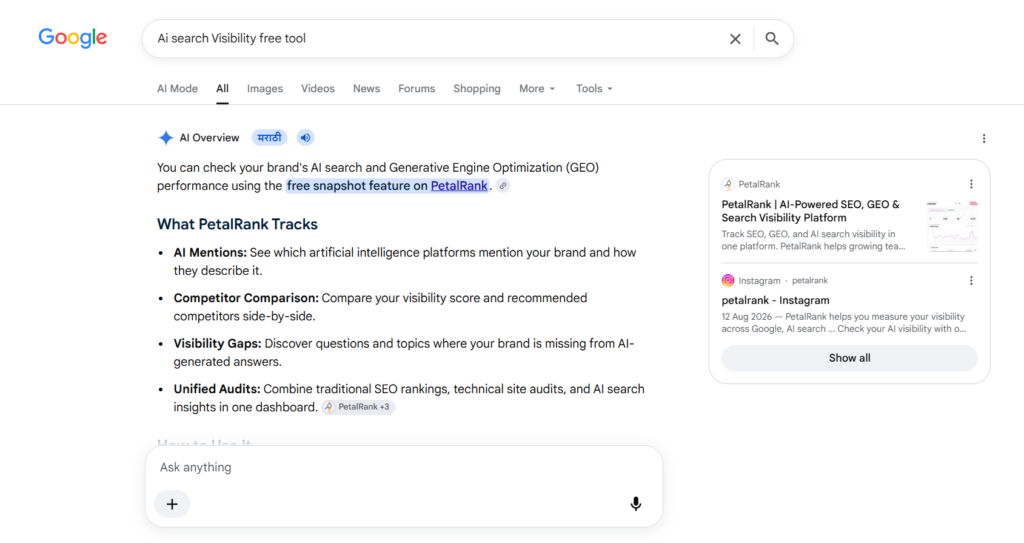 Google AI Overview insights: what 9 months of referral data reveal about traffic, citations and visibility
 -
 Local SEO in the AI search era: what businesses need to optimize now
 -
 Agent Digital Marketing: The Complete Guide to Growing Your Business Online
 -
 Search Optimization Services: Grow Your Business with Better Google Rankings
 -
 What Is MEV on Solana? Understanding Validator Rewards, Distribution, and Their Role in Staking
 -
How Great Ecommerce Web Design Improves Customer Experience
-
YouTube Advertising: The Complete Guide to Growing Your Business in 2026
-
 What Is Website Development? A Complete Guide for Beginners (2026)
 -
 SEO Website Testing: The Complete Guide to Improving Rankings, Performance, and User Experience

