
Growth Marketing vs Digital Marketing: Key Differences Explained
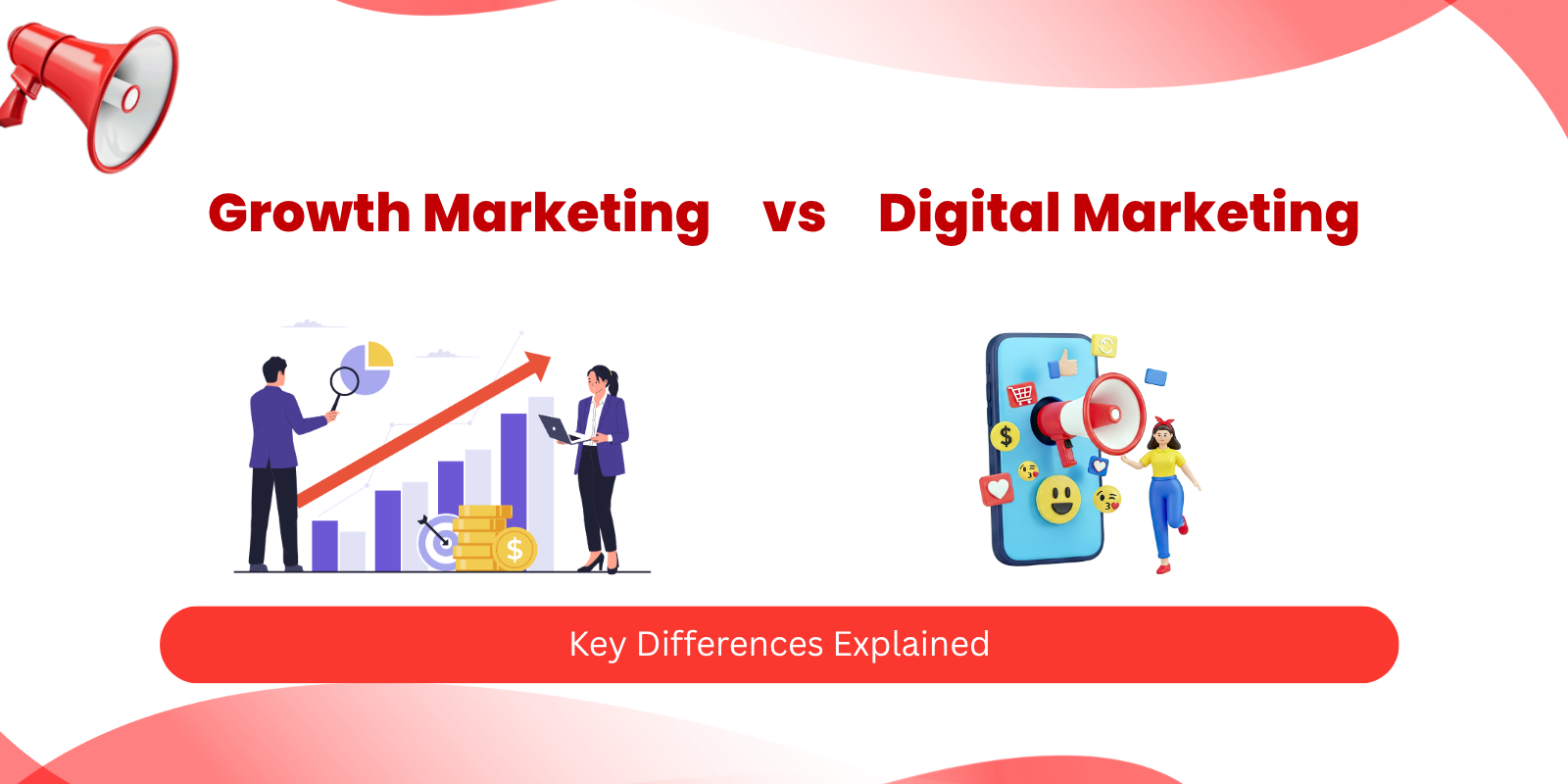
Modern businesses rely heavily on online channels to reach customers and drive revenue. Two terms that often appear in this space are digital marketing and growth marketing. While they may sound similar, they represent different approaches to achieving business growth.
Digital marketing focuses primarily on promoting products or services through online platforms such as search engines, social media, email, and paid advertising. Growth marketing, on the other hand, takes a broader and more experimental approach that aims to optimize the entire customer journey—from acquisition to retention.
Understanding the difference between these two approaches helps businesses build more effective strategies and allocate resources wisely. In this guide, we’ll explore what growth marketing and digital marketing are, how they differ, and when each approach makes the most sense.
What Is Digital Marketing?
Digital marketing refers to the use of online channels and technologies to promote products, services, or brands. It includes a wide range of strategies designed to attract audiences, generate leads, and drive conversions through digital platforms.
Common digital marketing channels include:
- Search engine marketing (SEM)
- Search engine optimization (SEO)
- Social media marketing
- Email campaigns
- Display and video advertising
- Content marketing
The primary objective of digital marketing is to increase brand visibility and attract potential customers using online platforms where audiences spend time.
Digital marketing strategies often focus on driving traffic and capturing leads, which can later be nurtured into paying customers.
What Is Growth Marketing?
Growth marketing expands beyond traditional digital marketing by focusing on the entire customer lifecycle. Rather than concentrating only on customer acquisition, growth marketing aims to optimize every stage of the funnel—including engagement, retention, and referrals.
Growth marketers rely heavily on experimentation and data analysis. They run continuous tests to determine which tactics generate the best results and then scale successful strategies.
Key aspects of growth marketing include:
- Data-driven experimentation
- Conversion rate optimization
- Customer retention strategies
- Product-led growth initiatives
- Referral and loyalty programs
This approach views marketing not as a separate function but as a core driver of sustainable business growth.
The Customer Funnel in Growth Marketing
Growth marketing typically examines the customer journey through several stages. Each stage presents opportunities to optimize engagement and improve results.
Acquisition
This stage focuses on attracting new users through channels such as search, social media, paid advertising, or partnerships. The goal is to introduce potential customers to the brand and encourage initial interaction.
Activation
Activation occurs when users take meaningful first actions, such as signing up for an account, starting a free trial, or engaging with a product feature.
Growth marketers focus on improving onboarding experiences to ensure users quickly see value in the product.
Retention
Retaining customers is essential for sustainable growth. Strategies such as personalized messaging, product improvements, and loyalty programs help keep users engaged over time.
Revenue
At this stage, businesses convert engaged users into paying customers and increase revenue through upselling, cross-selling, or subscription models.
Referral
Satisfied customers often become brand advocates who recommend products to others. Referral programs and community engagement can turn loyal customers into powerful acquisition channels.
Key Differences Between Growth Marketing and Digital Marketing
Although the two approaches share some tactics, they differ in their focus and scope.
Strategic Focus
Digital marketing primarily focuses on customer acquisition through online channels. Growth marketing looks at the entire customer journey, from first interaction to long-term loyalty.
Experimentation
Growth marketing relies heavily on continuous testing and experimentation to discover new opportunities. Digital marketing campaigns may involve testing, but they are often more campaign-driven.
Data Usage
Both approaches use data, but growth marketing typically integrates data from multiple sources—including product usage, customer behavior, and retention metrics—to guide decisions.
Long-Term Impact
Digital marketing campaigns often aim for short-term results such as increased traffic or immediate conversions. Growth marketing emphasizes sustainable growth through improved retention and customer lifetime value.
Why Businesses Are Adopting Growth Marketing
Many organizations are shifting toward growth marketing because it addresses challenges that traditional marketing methods cannot solve alone.
One reason is rising customer acquisition costs. As competition increases across digital platforms, acquiring new users becomes more expensive. Growth marketing helps businesses improve efficiency by focusing on retention and lifetime value.
Another factor is the availability of advanced analytics tools. Companies can now track customer behavior more accurately and identify opportunities for optimization across the entire customer journey.
This data-driven environment makes growth marketing an attractive strategy for companies aiming to scale efficiently.
Growth Marketing Strategies Businesses Use Today
Successful growth marketing strategies often combine multiple tactics across marketing, product, and customer experience.
Continuous Experimentation
Growth teams frequently run experiments on landing pages, pricing models, and marketing channels to identify what drives engagement and conversions.
Personalization
Using behavioral data, businesses tailor messages and offers to individual users, improving relevance and engagement.
Product-Led Growth
In some industries, the product itself becomes the primary driver of customer acquisition. Free trials, freemium models, and seamless onboarding experiences encourage users to explore the product before committing to a purchase.
Customer Retention Programs
Loyalty initiatives, subscription incentives, and community engagement programs help retain customers and increase lifetime value.
When to Use Digital Marketing vs Growth Marketing
Digital marketing and growth marketing are not mutually exclusive. In fact, most successful businesses combine both approaches.
Digital marketing provides the tools and channels needed to reach new audiences. Growth marketing then optimizes the journey those users take once they interact with the brand.
For example, a company might use digital advertising to attract visitors while using growth marketing techniques to improve onboarding, retention, and referrals.
Together, these approaches create a more balanced and sustainable growth strategy.
Final Thoughts
Digital marketing and growth marketing share the same ultimate goal—helping businesses grow—but they approach that goal in different ways.
Digital marketing and growth marketing share the same ultimate goal—helping businesses grow—but they approach that goal in different ways.
Digital marketing focuses on reaching and acquiring customers through online channels, while growth marketing looks at the entire customer lifecycle and emphasizes continuous experimentation and optimization.
Businesses that combine both approaches can build stronger marketing strategies that not only attract customers but also retain and engage them over time.
As the marketing landscape continues to evolve, understanding the relationship between these two approaches will help organizations stay competitive and drive long-term success.
Recent posts
-
 Best AI Tools in 2026: Which Ones Are Actually Worth Using?
 -
 Google AI Overview insights: what 9 months of referral data reveal about traffic, citations and visibility
 -
 Local SEO in the AI search era: what businesses need to optimize now
 -
 Agent Digital Marketing: The Complete Guide to Growing Your Business Online
 -
 Search Optimization Services: Grow Your Business with Better Google Rankings
 -
 What Is MEV on Solana? Understanding Validator Rewards, Distribution, and Their Role in Staking
 -
How Great Ecommerce Web Design Improves Customer Experience
-
YouTube Advertising: The Complete Guide to Growing Your Business in 2026
-
 What Is Website Development? A Complete Guide for Beginners (2026)
 -
 SEO Website Testing: The Complete Guide to Improving Rankings, Performance, and User Experience

