
What Is PPC Marketing and Why It Matters for Businesses
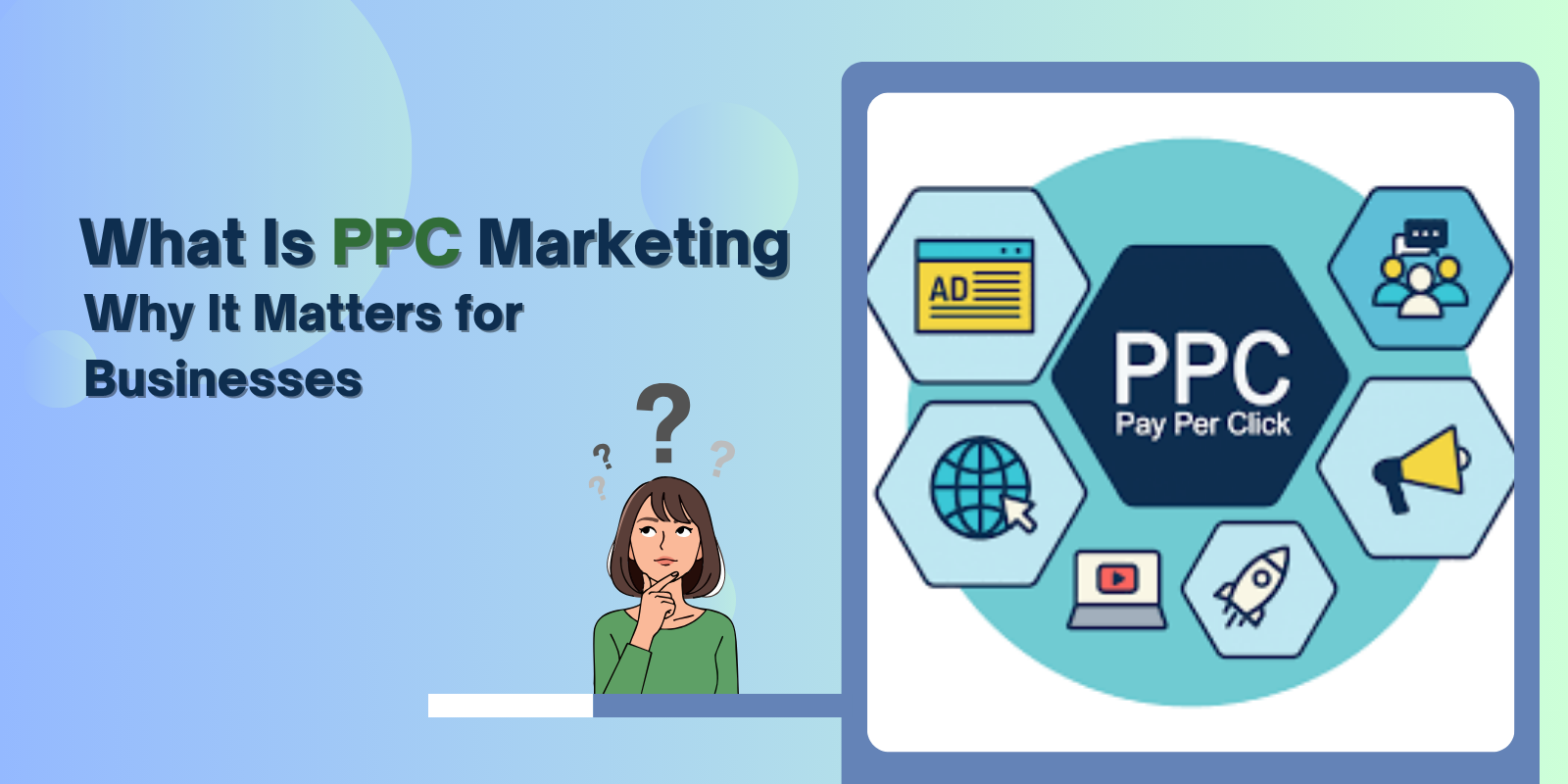
In the digital age, businesses must compete for attention across search engines, social media platforms, and websites. One of the most effective ways to gain immediate visibility online is through PPC marketing.
Pay-per-click (PPC) marketing allows businesses to display ads to users actively searching for products, services, or information. Instead of paying for ad placement alone, advertisers pay only when someone clicks on their ad. This performance-based model makes PPC one of the most measurable and scalable forms of online advertising.
In this guide, we’ll explore what PPC marketing is, how it works, and why it plays a critical role in helping businesses attract customers and grow revenue.
What Is PPC Marketing?
PPC marketing, or pay-per-click marketing, is a form of digital advertising in which businesses pay a fee each time someone clicks on their advertisement. These ads typically appear on search engines, social media platforms, or other digital spaces where users interact with online content.
Search engine advertising is one of the most common forms of PPC. When users search for keywords related to a product or service, sponsored ads appear at the top or bottom of the search results. These ads help businesses gain visibility for relevant searches without relying solely on organic rankings.
Because advertisers only pay when users click, PPC campaigns allow businesses to focus spending on actions that demonstrate real interest.
How PPC Marketing Works
PPC advertising operates through auction-based systems managed by advertising platforms. Advertisers select specific keywords or audience criteria and create ads designed to appear when those conditions are met.
When a user performs a search or fits the targeted audience profile, the advertising platform evaluates competing bids from different advertisers. The platform then determines which ads appear based on factors such as bid amount, ad relevance, and quality score.
If a user clicks on the ad, the advertiser is charged the agreed cost per click. This system ensures that businesses pay for measurable engagement rather than simple exposure.
Why PPC Marketing Matters for Businesses
PPC marketing offers several advantages that make it valuable for companies of all sizes.
First, it provides immediate visibility. Unlike search engine optimization (SEO), which can take months to produce results, PPC campaigns can begin generating traffic as soon as they are launched.
Second, PPC allows businesses to target highly specific audiences. Advertisers can define audiences based on location, interests, demographics, or search intent, ensuring ads reach users most likely to convert.
Finally, PPC offers detailed performance insights. Platforms provide analytics that allow marketers to track clicks, conversions, and return on investment, making it easier to optimize campaigns over time.
Key Components of a Successful PPC Campaign
A well-structured PPC campaign involves several important elements working together.
Keywords
Keywords determine when ads appear in search results. Choosing the right keywords ensures ads reach users actively searching for relevant products or services.
Ad Copy
Ad copy includes the headlines and descriptions that appear in PPC ads. Compelling messaging helps attract attention and encourages users to click.
Landing Pages
When users click on an ad, they are directed to a landing page designed to encourage a specific action, such as making a purchase or filling out a form. Effective landing pages align closely with the message of the ad.
Bidding Strategy
Advertisers set bids that determine how much they are willing to pay for each click. Platforms often provide automated bidding options that optimize campaigns based on performance goals.
Performance Tracking
Tracking metrics such as click-through rate (CTR), cost per acquisition (CPA), and conversion rate helps marketers evaluate campaign effectiveness and identify areas for improvement.
Tracking metrics such as click-through rate (CTR), cost per acquisition (CPA), and conversion rate helps marketers evaluate campaign effectiveness and identify areas for improvement.
Types of PPC Advertising
PPC marketing can appear across multiple digital channels, each offering unique opportunities.
Search Ads
Search ads appear on search engine results pages when users search for specific keywords. These ads target users with high intent, making them particularly valuable for driving conversions.
Search ads appear on search engine results pages when users search for specific keywords. These ads target users with high intent, making them particularly valuable for driving conversions.
Display Ads
Display ads appear on websites and apps within advertising networks. These visual ads help businesses increase brand awareness and reach audiences across a wide range of online environments.
Social Media Ads
Many social platforms offer PPC advertising options that allow businesses to target audiences based on interests, demographics, and behaviors.
Shopping Ads
Shopping ads showcase products directly within search results, often including images, pricing information, and product descriptions. These ads are commonly used by ecommerce businesses.
Shopping ads showcase products directly within search results, often including images, pricing information, and product descriptions. These ads are commonly used by ecommerce businesses.
Benefits of PPC Marketing
Businesses use PPC marketing because it offers several significant advantages.
Businesses use PPC marketing because it offers several significant advantages.
Immediate Traffic
PPC campaigns can drive visitors to a website quickly, making them useful for product launches, promotions, or new market entry.
PPC campaigns can drive visitors to a website quickly, making them useful for product launches, promotions, or new market entry.
Precise Targeting
Advertisers can tailor campaigns to reach users based on search behavior, location, device type, and other factors.
Measurable Results
Detailed analytics allow businesses to measure campaign performance and adjust strategies to improve outcomes.
Budget Control
PPC platforms allow advertisers to set daily or monthly budgets, ensuring spending remains within defined limits.
Best Practices for Effective PPC Campaigns
To maximize the impact of PPC marketing, businesses should follow several best practices.
Conduct Thorough Keyword Research
Selecting keywords with strong relevance and manageable competition helps improve campaign performance.
Selecting keywords with strong relevance and manageable competition helps improve campaign performance.
Write Clear and Compelling Ads
Ads should clearly communicate the value of the product or service while encouraging users to click.
Ads should clearly communicate the value of the product or service while encouraging users to click.
Optimize Landing Pages
Landing pages should provide a seamless experience that reinforces the promise made in the advertisement.
Monitor Campaign Performance
Regular analysis of performance metrics helps identify opportunities to refine targeting, adjust bids, and improve ad messaging.
Regular analysis of performance metrics helps identify opportunities to refine targeting, adjust bids, and improve ad messaging.
Test and Improve Continuously
Running A/B tests on ad copy, targeting options, and landing page designs helps marketers discover what works best for their audience.
Measuring PPC Success
Successful PPC campaigns are evaluated through key performance indicators such as:
- Click-through rate (CTR)
- Conversion rate
- Cost per click (CPC)
- Cost per acquisition (CPA)
- Return on ad spend (ROAS)
Tracking these metrics helps businesses determine whether campaigns are achieving their marketing objectives.
Final Thoughts
PPC marketing is one of the most effective digital advertising strategies for businesses looking to attract targeted traffic and generate measurable results. By allowing advertisers to reach users who are actively searching for relevant solutions, PPC campaigns can deliver immediate visibility and scalable growth opportunities.
When combined with thoughtful keyword selection, compelling ad messaging, and continuous optimization, PPC marketing becomes a powerful tool for driving leads, sales, and long-term business success.
Recent posts
-
 Best AI Tools in 2026: Which Ones Are Actually Worth Using?
 -
 Google AI Overview insights: what 9 months of referral data reveal about traffic, citations and visibility
 -
 Local SEO in the AI search era: what businesses need to optimize now
 -
 Agent Digital Marketing: The Complete Guide to Growing Your Business Online
 -
 Search Optimization Services: Grow Your Business with Better Google Rankings
 -
 What Is MEV on Solana? Understanding Validator Rewards, Distribution, and Their Role in Staking
 -
How Great Ecommerce Web Design Improves Customer Experience
-
YouTube Advertising: The Complete Guide to Growing Your Business in 2026
-
 What Is Website Development? A Complete Guide for Beginners (2026)
 -
 SEO Website Testing: The Complete Guide to Improving Rankings, Performance, and User Experience

