
AI search engine advertising: How businesses win visibility in AI search

Key takeaways
- AI search advertising allows brands to appear within AI-generated search experiences and answer engines.
- Platforms like Google AI Overviews, Microsoft Copilot, and Perplexity are creating new advertising opportunities.
- AI search ads help businesses reach users during high-intent research and decision-making moments.
- Early adopters can gain a competitive advantage before these platforms become crowded.
- AI-powered search experiences are changing how users discover products, services, and brands.
- Businesses should combine AI search advertising with SEO, AEO, and GEO strategies for maximum visibility.
- AI search advertising is expected to become one of the fastest-growing digital marketing channels over the next few years.
Introduction
The way people search online is changing. For decades, businesses relied on traditional search engines to attract customers through organic rankings and paid search ads. Today, users increasingly turn to AI-powered platforms like ChatGPT, Google AI Overviews, Microsoft Copilot, Gemini, and Perplexity to find answers, compare solutions, and make purchasing decisions.
Instead of scrolling through pages of search results, users now ask direct questions and receive personalized responses instantly.
This shift has created a new advertising opportunity. Businesses can now place advertisements directly within AI-powered search experiences, reaching users at the exact moment they are evaluating products, services, and solutions.
As AI-driven search adoption grows, understanding AI search engine advertising is becoming essential for marketers looking to stay ahead of competitors.
What is AI search engine advertising?
AI search engine advertising refers to paid advertisements displayed within AI-powered search environments and answer engines.
Unlike traditional PPC advertising that appears alongside search results, AI search ads are integrated into conversational experiences and AI-generated responses.
Examples include:
- Sponsored recommendations within AI assistants
- Product suggestions inside AI-generated answers
- Contextual ads within conversational search experiences
- Sponsored listings linked to user intent and search context
These ads appear when AI systems determine that a product, service, or solution is relevant to the user’s question.
The goal is not simply to capture clicks but to influence decisions during the information discovery process.
Why AI search advertising matters
AI-powered search is transforming customer behavior.
Users increasingly expect:
- Instant answers
- Personalized recommendations
- Faster research experiences
- Conversational interactions
- Context-aware suggestions
As a result, traditional search journeys are becoming shorter.
Instead of reviewing multiple websites, users often receive enough information from AI-generated responses to make a decision.
This makes AI search advertising an important channel for businesses seeking visibility in emerging search ecosystems.
Key benefits of AI search advertising
1. Reach users earlier in the buying journey
AI search platforms often engage users during the research and evaluation stages.
Businesses can influence purchasing decisions before competitors enter the conversation.
2. Gain a competitive advantage
AI search advertising remains relatively new.
Brands that adopt these platforms early can secure visibility before competition increases and advertising costs rise.
3. Improve Ad performance
AI systems understand user intent more deeply than traditional keyword matching.
This contextual understanding can help advertisers reach more qualified audiences.
Benefits often include:
- Better targeting
- Higher engagement
- Improved relevance
- Increased conversion potential
4. Expand beyond traditional search
Search behavior is no longer limited to Google.
Users now discover information through:
- AI assistants
- Answer engines
- Conversational search tools
- Recommendation engines
Advertising across AI platforms helps brands stay visible wherever users search.
5. Support multi-channel marketing strategies
AI search advertising works best when combined with:
- SEO
- Content marketing
- Email marketing
- Social media campaigns
- Conversion optimization
Together, these channels create a stronger customer acquisition ecosystem.
Which AI search platforms support advertising?
While AI advertising is still evolving, several major platforms already offer opportunities for businesses.
Google AI Overviews
Google AI Overviews generate AI-powered summaries directly within search results.
These summaries often appear above traditional organic listings.
Advertising Opportunities
Businesses can appear through:
- Search Ads
- Shopping Ads
- Performance Max Campaigns
Benefits
- Massive search reach
- High purchase intent
- Familiar with the Google Ads ecosystem
- Integration with existing campaigns
As AI Overviews become more prominent, advertising within these experiences may become a critical part of paid search strategies.
Microsoft Copilot
Microsoft Copilot combines conversational AI with Microsoft’s advertising ecosystem.
Ads can appear when Copilot determines that a sponsored recommendation is relevant to the user’s request.
Benefits
- Context-aware advertising
- Conversational engagement
- Access to Microsoft’s search audience
- Enhanced personalization opportunities
Copilot uses conversation history and user intent to determine ad relevance, creating highly targeted experiences.
Perplexity AI
Perplexity has emerged as one of the fastest-growing AI answer engines.
Users frequently use the platform for:
- Product research
- Brand comparisons
- Market analysis
- Information discovery
Advertising Opportunities
Perplexity is developing sponsored placements that can appear within:
- Answer pages
- Related question sections
- Recommendation modules
As adoption grows, Perplexity may become an important advertising channel for businesses targeting research-driven audiences.
How AI search advertising differs from traditional PPC
Traditional PPC relies heavily on keywords.
AI search advertising focuses more on:
|
Traditional PPC |
AI Search Advertising |
|
Keyword targeting |
Intent targeting |
|
Search terms |
Conversation context |
|
Static queries |
Dynamic interactions |
|
SERP placement |
AI-generated responses |
|
Click-focused |
Discovery-focused |
This shift requires marketers to think beyond keyword bidding and focus more on audience intent.
Best practices for AI search advertising
Understand user intent
AI platforms analyze intent rather than simple keywords.
Create campaigns around customer problems, needs, and goals.
Align Ads with conversations
Your messaging should match how users naturally ask questions.
Examples:
Instead of:
“Best CRM Software”
Use:
“Looking for a CRM that helps remote sales teams improve productivity?”
Create High-Quality Landing Pages
AI-driven traffic often arrives with specific expectations.
Landing pages should provide:
- Direct answers
- Strong value propositions
- Social proof
- Clear calls-to-action
Combine paid and organic visibility
Businesses should not rely solely on advertising.
Strong visibility comes from combining:
- AI Search Advertising
- Technical SEO
- Answer Engine Optimization (AEO)
- Generative Engine Optimization (GEO)
- Content Marketing
This creates multiple opportunities for discovery across AI-powered search environments.
The future of AI search advertising
AI-powered discovery is still in its early stages.
Over the next few years, businesses can expect:
- More AI ad formats
- Better targeting capabilities
- Enhanced personalization
- Cross-platform advertising opportunities
- New answer-engine advertising networks
Platforms like ChatGPT, Gemini, and emerging AI assistants may introduce additional advertising options as user adoption continues to grow.
Brands that prepare now will be better positioned to capitalize on future opportunities.
Final thoughts
AI search is changing how consumers discover products, services, and information.
Advertising within AI-powered search experiences gives businesses a new way to reach customers during critical decision-making moments.
While platforms like Google AI Overviews, Microsoft Copilot, and Perplexity currently lead the way, the AI advertising ecosystem is evolving rapidly.
Businesses that combine AI search advertising with strong SEO, GEO, and AEO strategies will be best positioned to maintain visibility and drive growth in the next generation of search.
At Espial Solutions, we help businesses prepare for the future of AI-powered marketing through advanced SEO, AI Search Optimization, Generative Engine Optimization, paid advertising strategies, and digital growth solutions designed for modern search ecosystems.
Recent posts
-
 Best AI Tools in 2026: Which Ones Are Actually Worth Using?
 -
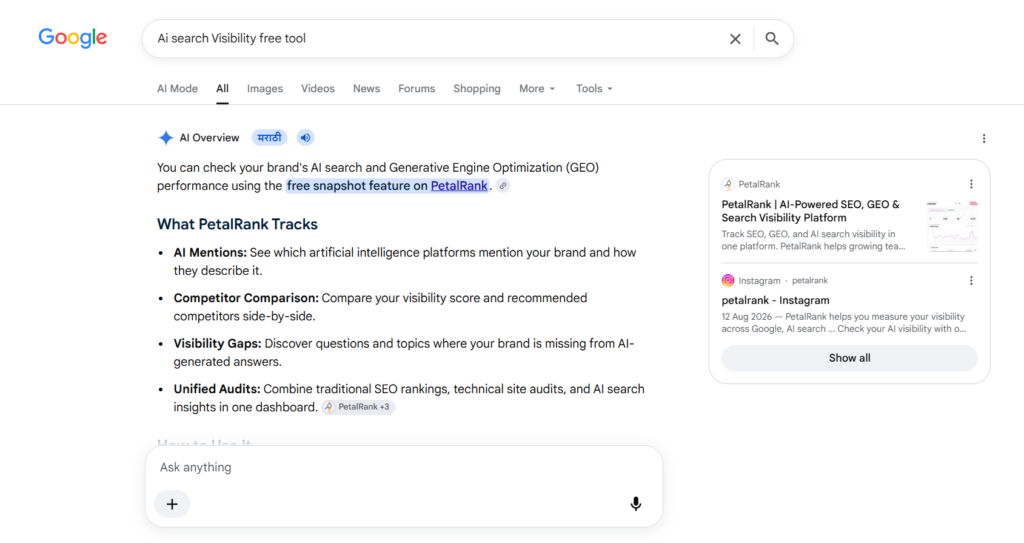 Google AI Overview insights: what 9 months of referral data reveal about traffic, citations and visibility
 -
 Local SEO in the AI search era: what businesses need to optimize now
 -
 Agent Digital Marketing: The Complete Guide to Growing Your Business Online
 -
 Search Optimization Services: Grow Your Business with Better Google Rankings
 -
 What Is MEV on Solana? Understanding Validator Rewards, Distribution, and Their Role in Staking
 -
How Great Ecommerce Web Design Improves Customer Experience
-
YouTube Advertising: The Complete Guide to Growing Your Business in 2026
-
 What Is Website Development? A Complete Guide for Beginners (2026)
 -
 SEO Website Testing: The Complete Guide to Improving Rankings, Performance, and User Experience

