
SEO Website Testing: The Complete Guide to Improving Rankings, Performance, and User Experience
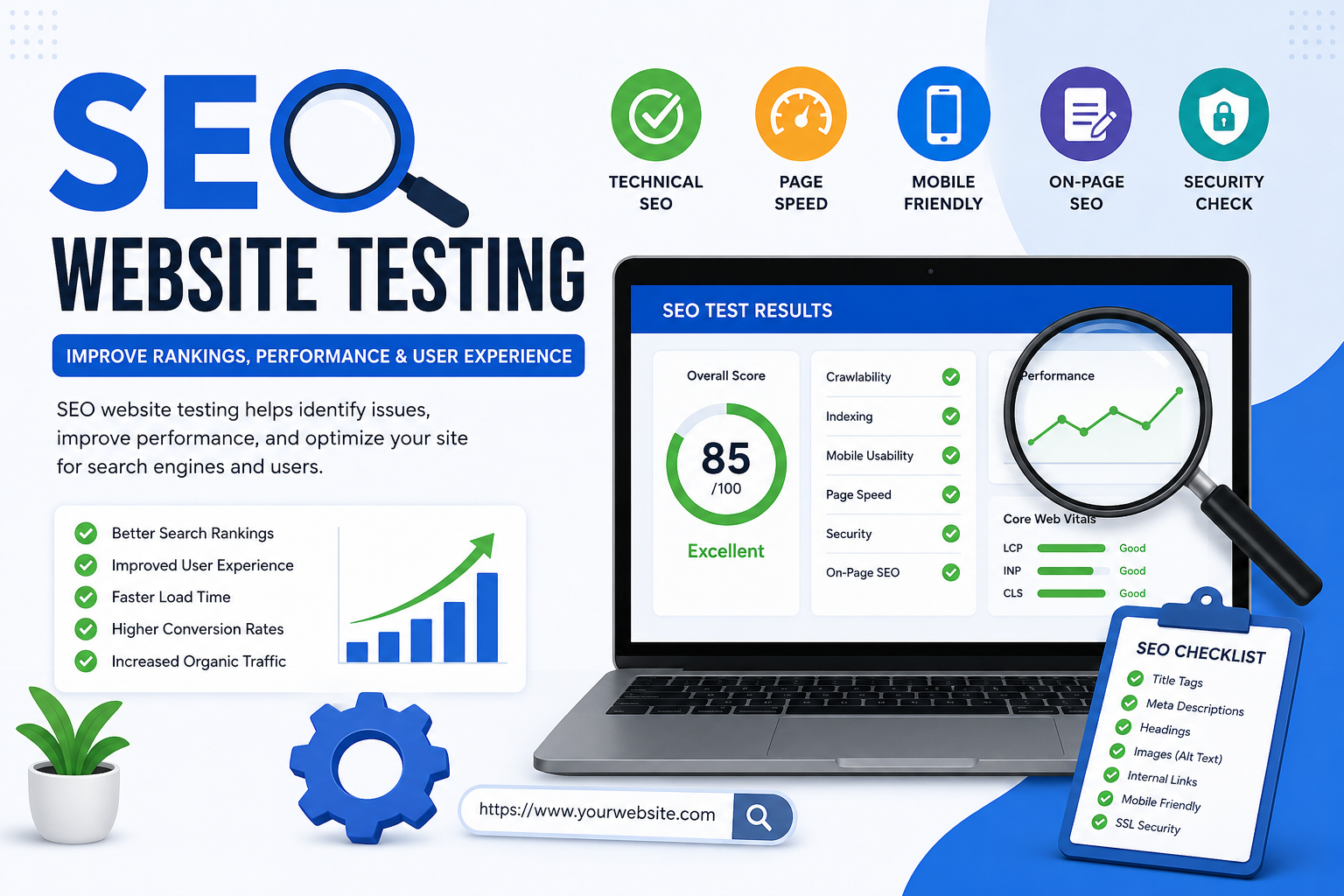
What Is SEO Website Testing?
SEO website testing is the process of evaluating every aspect of a website that affects search engine optimization. It involves checking technical performance, content quality, page speed, mobile responsiveness, user experience, security, and indexing to ensure search engines can properly crawl and rank your website.
Rather than making random SEO changes, testing provides measurable insights into what works and what needs improvement.
The primary goal is to improve:
- Search engine rankings
- Organic traffic
- User experience
- Website performance
- Conversion rates
Why SEO Website Testing Is Important
Regular SEO testing offers numerous benefits.
Better Search Rankings
Search engines prioritize websites that load quickly, provide valuable content, and offer a smooth user experience. Testing helps identify problems that may prevent higher rankings.
Improved User Experience
Visitors expect websites to load within seconds. Slow or difficult-to-navigate websites often experience higher bounce rates. SEO testing helps optimize navigation, readability, and usability.
Increased Organic Traffic
A well-optimized website attracts more visitors from search engines without relying solely on paid advertising.
Higher Conversion Rates
When users can easily navigate your website and find the information they need, they are more likely to make a purchase, submit a form, or contact your business.
Types of SEO Website Testing
- Technical SEO Testing
Technical SEO focuses on how search engines crawl and index your website.
Check for:
- Crawl errors
- XML sitemap issues
- Robots.txt configuration
- HTTPS implementation
- Canonical tags
- Redirect errors
- Broken links
- Duplicate pages
A technically sound website provides a strong foundation for SEO success.
- Page Speed Testing
Website speed is a confirmed ranking factor.
Test:
- Server response time
- Image optimization
- JavaScript loading
- CSS optimization
- Browser caching
- Compression
Fast-loading websites improve both rankings and user satisfaction.
- Mobile SEO Testing
More than half of global web traffic comes from mobile devices.
Mobile testing includes:
- Responsive design
- Mobile usability
- Readable text
- Touch-friendly buttons
- Proper spacing
- Fast mobile loading
Google primarily indexes the mobile version of websites, making mobile optimization essential.
- On-Page SEO Testing
On-page SEO ensures every page is properly optimized.
Review:
- Page titles
- Meta descriptions
- Heading structure
- Keyword placement
- Internal linking
- Image alt text
- URL structure
Every page should target one primary keyword while naturally incorporating related terms.
- Content Quality Testing
Search engines reward helpful, informative, and original content.
Evaluate:
- Keyword relevance
- Readability
- Content depth
- Grammar
- Duplicate content
- User intent
- Freshness
High-quality content builds trust and improves rankings over time.
Core Elements to Test
Title Tags
Each page should have a unique, descriptive title that includes the primary keyword near the beginning.
Example:
SEO Website Testing – Complete Guide for Better Rankings
Meta Descriptions
Write compelling descriptions that encourage users to click.
Example:
Learn how SEO website testing improves rankings, page speed, user experience, and technical performance with this complete guide.
Headings
Use headings logically:
- H1 for the main title
- H2 for major sections
- H3 for subsections
This improves readability and helps search engines understand your content.
URL Structure
Good URL:
example.com/seo-website-testing
Poor URL:
example.com/page?id=12345
Short, descriptive URLs perform better.
Internal Links
Link related pages together to help users and search engines discover more content.
Examples include:
- SEO Audit Checklist
- Technical SEO Guide
- Website Speed Optimization
- Keyword Research Guide
External Links
Link to authoritative sources when supporting important claims. Quality external links improve credibility and provide additional value to readers.
Website Performance Testing
Performance directly influences user satisfaction.
Test:
- Largest Contentful Paint (LCP)
- First Input Delay (FID) or Interaction to Next Paint (INP)
- Cumulative Layout Shift (CLS)
- Time to First Byte (TTFB)
Improving these metrics enhances both SEO and the overall user experience.
Security Testing
Secure websites rank better and inspire trust.
Verify:
- HTTPS
- SSL certificate
- Mixed content issues
- Malware scans
- Secure login pages
Users are less likely to engage with websites flagged as insecure.
Image SEO Testing
Images should be optimized for performance and accessibility.
Best practices:
- Compress images
- Use descriptive filenames
- Add alt text
- Choose modern formats like WebP
- Enable lazy loading
Optimized images improve page speed and can drive traffic from image search.
Structured Data Testing
Structured data helps search engines understand your content and can enable rich results.
Common schema types include:
- Article
- FAQ
- Product
- Review
- Organization
- Breadcrumb
- Local Business
Proper implementation can improve visibility in search results.
Common SEO Website Issues
Many websites suffer from problems such as:
- Duplicate content
- Broken links
- Missing meta tags
- Slow loading times
- Poor mobile responsiveness
- Thin content
- Missing image alt text
- Incorrect redirects
- Crawl errors
- Orphan pages
Regular testing helps identify and resolve these issues before they affect rankings.
Best Practices for SEO Website Testing
Follow these practices to maintain strong SEO performance:
- Test your website regularly.
- Monitor Core Web Vitals.
- Keep content updated.
- Optimize images before uploading.
- Fix broken links promptly.
- Use descriptive URLs.
- Improve internal linking.
- Regularly review technical SEO.
- Optimize for mobile-first indexing.
- Track rankings and organic traffic.
Consistency is key—SEO is an ongoing process, not a one-time task.
Benefits of Regular SEO Website Testing
Organizations that continuously test and optimize their websites often experience:
- Higher Google rankings
- Increased organic traffic
- Faster page loading
- Better user engagement
- Lower bounce rates
- More leads and sales
- Improved website security
- Enhanced user experience
- Stronger brand credibility
Even small improvements can produce meaningful long-term results.
Conclusion
SEO website testing is essential for maintaining a healthy, high-performing website. By regularly evaluating technical SEO, page speed, mobile usability, content quality, structured data, and user experience, you can identify issues early and make informed improvements.
Search engine algorithms continue to evolve, and user expectations grow every year. A proactive approach to SEO testing helps your website remain competitive, attract more organic visitors, and deliver a better experience for every user.
Whether you’re managing a personal blog, a corporate website, or an eCommerce store, incorporating SEO website testing into your routine will help improve rankings, increase visibility, and support sustainable online growth.
Start testing your website today, fix identified issues, and continue monitoring performance over time. Consistent optimization is the foundation of long-term SEO success.
Recent posts
-
 Best AI Tools in 2026: Which Ones Are Actually Worth Using?
 -
 Agent Digital Marketing: The Complete Guide to Growing Your Business Online
 -
 Search Optimization Services: Grow Your Business with Better Google Rankings
 -
 What Is MEV on Solana? Understanding Validator Rewards, Distribution, and Their Role in Staking
 -
How Great Ecommerce Web Design Improves Customer Experience
-
YouTube Advertising: The Complete Guide to Growing Your Business in 2026
-
 What Is Website Development? A Complete Guide for Beginners (2026)
 -
 SEO Website Testing: The Complete Guide to Improving Rankings, Performance, and User Experience
 -
 How Retargeting Campaigns Bring Previous Visitors Back to Your Website
 -
 Google’s local services ads update is about more than compliance. It’s about trust

