AI Visibility Ranking Factors: How to Get Your Brand Cited by ChatGPT, Gemini & Perplexity
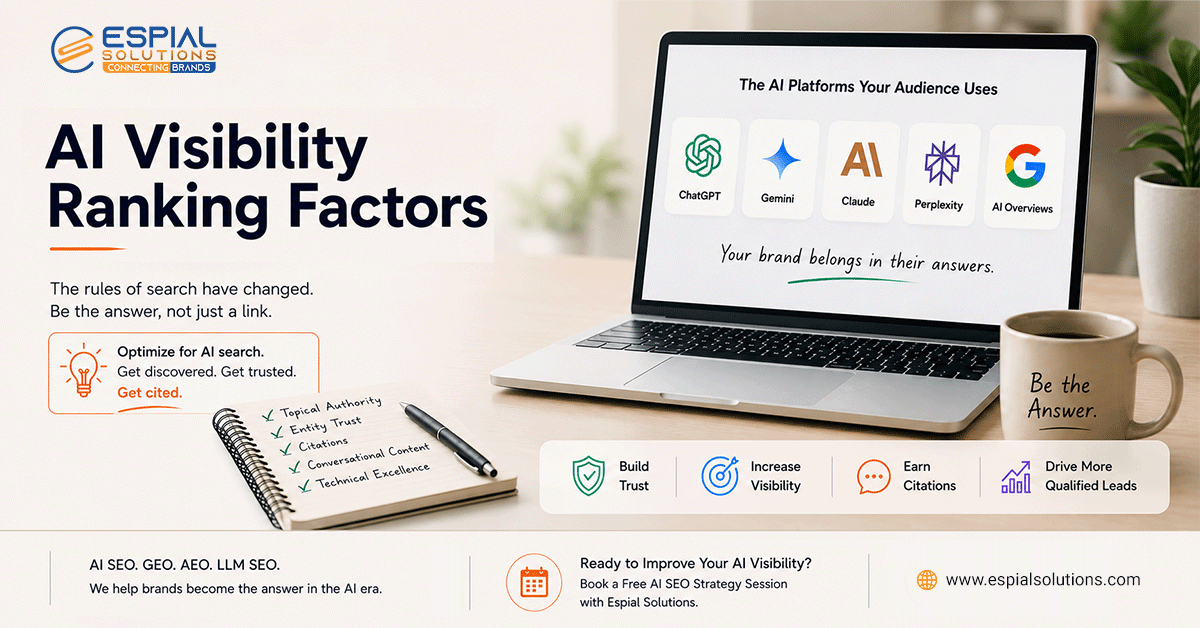
Introduction: The new battleground for brand visibility
The rules of search have fundamentally changed.
For years, brands competed for visibility on Google’s first page. Today, users increasingly skip traditional search results entirely. They ask questions directly to ChatGPT, Gemini, Perplexity, and Google’s AI Overviews.
Instead of showing 10 blue links, these platforms generate a single synthesized answer that often mentions only a few brands.
If your company is not part of that answer, you may never enter the buyer’s consideration journey.
This shift has created an entirely new discipline: AI SEO and generative engine optimization.
Understanding the core AI visibility ranking factors that influence how AI systems select, cite, and recommend brands is now critical for long-term digital visibility.
In this guide, you’ll learn:
- How AI search engines choose sources
- What ranking signals influence AI-generated answers
- How ChatGPT, Gemini, and Perplexity differ
- The most important AI visibility ranking factors in 2026
- How to improve your brand visibility in AI search
- The framework businesses can use to dominate AI-driven discovery.
What are AI visibility ranking factors?
AI visibility ranking factors are the signals AI platforms like ChatGPT, Gemini, Perplexity, and Google AI Overviews use to determine which brands, websites, and sources appear inside AI-generated answers.
These signals include:
- Topical authority
- E-E-A-T
- Structured data
- Brand mentions
- Entity SEO
- Content freshness
- Conversational relevance
- Technical SEO
- AI citations across the web
Unlike traditional SEO, the goal is not only to rank on search engines. The goal is to become part of the AI-generated answer itself.
Example:
If someone asks ChatGPT:
“Which are the best AI SEO agencies for SaaS companies?”
The AI system may mention brands that:
- Consistently publish AI SEO content
- Are cited across marketing websites
- Have strong topical authority
- Are discussed on LinkedIn, Reddit, or industry blogs
- Have clear expertise signals
A company with a beautiful website but weak authority signals may never appear in the answer.
What is AI visibility optimization?
AI visibility optimization is the process of improving your brand’s presence inside AI-generated search experiences.
It includes:
- AI SEO
- Generative engine optimization
- Answer engine optimization
- LLM SEO
- AI search optimization
The objective is simple: make your brand easy for AI systems to discover, trust, retrieve, and cite.
Traditional SEO vs AI SEO
Traditional SEO | AI SEO |
Optimizes for SERP rankings | Optimizes for AI-generated answers |
Focuses on clicks | Focuses on citations and mentions |
Competes for blue links | Competes for answer inclusion |
Relies heavily on keywords | Relies heavily on entities and authority |
Measures rankings | Measures AI visibility and share of voice |
Traditional SEO still matters. However, AI search optimization introduces an entirely new visibility layer.
Traditional SEO example:
A user searches:
“best CRM software”
Google shows 10 links.
AI SEO example:
A user asks:
“What is the best CRM for small businesses?”
ChatGPT may directly recommend:
- HubSpot
- Salesforce
- Zoho
without the user ever clicking a traditional search result.
How ChatGPT, Gemini, and Perplexity choose sources
Each AI platform retrieves and prioritizes information differently.
ChatGPT
ChatGPT relies on:
- Training data
- Trusted web sources
- Retrieval systems
- Real-time browsing in GPT-4o
It heavily favours:
- Authoritative domains
- Structured content
- Strong entity associations
- Frequently cited brands
Google Gemini
Gemini is deeply integrated into Google’s ecosystem and AI Overviews.
It prioritizes:
- E-E-A-T
- Core Web Vitals
- Google’s trusted index
- Semantic relevance
- Authoritative entities
Gemini closely aligns with Google’s existing quality systems.
Perplexity AI
Perplexity operates more like a real-time AI search engine.
It favours:
- Fresh content
- Transparent sourcing
- Conversational formatting
- Clearly structured answers
- Crawlable web pages
Perplexity is currently one of the easiest platforms to monitor for AI citation visibility because it openly displays its sources.
The Espial 5-layer AI visibility framework
At Espial Solutions, we use a proprietary framework to improve brand discoverability across AI answer engines.
Layer 1: Entity trust
AI systems must clearly understand:
- Who your brand is
- What your business does
- Which industry do you operate in
- Where your authority exists
This is the foundation of entity SEO.
Example:
If your company name appears differently across:
- Google Business Profile
- Review platforms
- Website schema
AI systems may struggle to confidently identify your business entity.
Consistent entity signals improve AI trust.
Layer 2: Topical authority
AI systems reward websites that comprehensively cover a subject area rather than publishing scattered, disconnected articles.
Depth beats breadth.
Example:
A website with:
- One generic AI SEO article
is far less likely to be cited than a website with:
- AI SEO guides
- ChatGPT optimization articles
- Perplexity SEO content
- AI Overviews explainers
- Entity SEO resources
- AI case studies
- LLM optimization checklists
AI systems interpret this depth as expertise.
Layer 3: Citation distribution
Brands consistently mentioned across:
- Articles
- Directories
- Podcasts
- Reviews
- Industry websites
- Social platforms
They are more likely to be retrieved by AI systems.
Example:
If your brand is repeatedly mentioned in:
- Clutch reviews
- Guest posts
- Podcasts
- LinkedIn discussions
- Industry articles
AI systems begin associating your company with that topic category.
Layer 4: Conversational retrieval optimization
AI systems prioritize content that mirrors how users naturally ask questions.
Conversational formatting improves retrieval probability.
Example:
Instead of writing:
“Our organization leverages innovative digital transformation methodologies.”
Write:
“Here’s how AI SEO helps your business appear in ChatGPT answers.”
AI systems favor clarity and conversational phrasing.
Layer 5: AI answer dominance
The final stage focuses on becoming the most trusted answer source within your niche across:
- ChatGPT
- Gemini
- Perplexity
- AI Overviews
The 10 most important AI visibility ranking factors
- E-E-A-T and source credibility
Experience, expertise, authoritativeness, and trustworthiness remain foundational ranking signals in AI search.
AI systems increasingly favor:
- Expert-authored content
- Cited sources
- Transparent credentials
- Trusted websites
- Verified entities
What to optimize:
- Author bios
- LinkedIn profiles
- Expert contributors
- Citations
- Case studies
- Research-backed insights
Action step:
Add expert bylines and author schema to every major article.
- Topical authority
One isolated article is no longer enough.
AI systems evaluate whether your website deeply owns a subject area.
A site with:
- 50 AI SEO articles
- Comparison pages
- FAQs
- Guides
- Case studies
- Glossary pages
will outperform a generic marketing website with a single AI SEO post.
This is one of the strongest AI visibility ranking factors today.
- Structured data and schema markup
AI systems prefer machine-readable content.
Schema helps AI engines understand:
- page type
- organization details
- FAQs
- products
- reviews
- authorship
Most valuable schema types:
- FAQPage
- HowTo
- Organization
- Article
- BlogPosting
- Product
- Review
Example:
A blog with an FAQ schema explaining:
“How does AI SEO work?”
It is easier for Google AI Overviews and Perplexity to extract and summarize than a plain, unstructured page.
- Brand mentions and AI citations
Links still matter.
But AI systems also evaluate unlinked brand mentions.
Brands are frequently discussed across authoritative websites to strengthen their entity authority.
This influences:
- AI citations
- AI discoverability
- AI retrieval confidence
- Conversational content formatting
AI systems retrieve content that sounds natural and directly answers user intent.
Good AI-search content:
- Answers questions clearly
- Avoids jargon
- Uses conversational phrasing
- Includes FAQs
- Mirrors spoken search behavior
Poor AI-search content:
- Keyword stuffing
- Robotic phrasing
- Vague marketing language
- Content freshness and update cycles
AI systems increasingly prioritize information that has been recently updated.
This is especially important for:
- AI tools
- Software
- Industry trends
- Technical workflows
Freshness strongly impacts:
- Perplexity citations
- Gemini retrieval
- AI Overviews visibility
Example:
An article updated in 2026 discussing the latest AI Overviews rollout is more likely to be cited than a similar article last updated in 2023.
- Entity SEO and knowledge graph clarity
Modern AI systems rely heavily on entities instead of keywords alone.
Your brand must consistently communicate:
- Company name
- Services
- Industry
- Expertise
- Locations
- Leadership
Entity consistency improves AI trust signals.
- Technical SEO and crawlability
AI systems still depend on crawlable infrastructure.
Critical technical factors:
- Page speed
- Core Web Vitals
- Mobile responsiveness
- Clean architecture
- HTTPS
- Crawl depth
- Internal linking
Example:
A slow website with broken schema and crawl errors may not be efficiently indexed by AI retrieval systems, reducing the likelihood of appearing in AI-generated answers.
- Multimedia and video authority
YouTube plays a growing role in AI retrieval systems.
AI systems are increasingly surfacing:
- Videos
- Transcripts
- Tutorials
- Explainers
- Visual walkthroughs
Brands with strong multimedia ecosystems often gain stronger authority signals.
- Third-party validation and social proof
AI systems cross-reference public trust signals.
Reviews, testimonials, case studies, and independent validation all strengthen retrieval confidence.
Important trust platforms include:
- Google Reviews
- Clutch
- G2
- Trustpilot
- Quora
Additional AI ranking signals most brands ignore
Many businesses optimize for SEO but completely ignore retrieval optimization signals.
Emerging AI visibility factors include:
- Retrieval augmented generation compatibility
- Semantic search alignment
- AI answer formatting
- Zero-click optimization
- Machine-readable content
- Vector retrieval compatibility
- AI chunking structure
- Contextual relevance
- Citation probability
- Passage-level optimization
Example: How AI visibility impacts buyer discovery
Imagine two cybersecurity companies.
Company A:
- Ranks moderately in Google
- Publishes occasional blogs
- Has limited industry mentions
Company B:
- Publishes detailed AI security guides
- Appears on podcasts
- Has FAQ schema
- Earns citations from trusted websites
- Consistently discusses cybersecurity trends
When a user asks Perplexity:
“Which cybersecurity companies specialize in AI threat detection?”
Company B is significantly more likely to appear inside the AI-generated answer.
That visibility happens before the user ever visits a traditional search engine results page.
This is the future of digital discovery.
How to optimize for Google AI Overviews
Google AI Overviews are rapidly changing search behavior.
To improve visibility inside AI Overviews:
- Answer questions directly
- Use concise definitions
- Implement schema markup
- Strengthen topical authority
- Improve page experience
- Build entity trust
- Publish updated expert content
Example:
A user searches:
“How does AI SEO work?”
Google AI Overviews may summarize content from:
- Authoritative blogs
- FAQ-rich pages
- Schema-enabled websites
- Trusted entities
instead of showing only traditional rankings.
How to rank in ChatGPT
Many businesses now ask:
“How do we rank in ChatGPT?”
The answer is not just traditional rankings.
To improve visibility in ChatGPT:
- Publish authoritative educational content
- Strengthen entity associations
- Earn citations across the web
- Create extractable answer blocks
- Build topical depth
- Optimize for conversational search
- Improve brand mentions
Example:
If a SaaS founder asks ChatGPT:
“Who are the top AI SEO agencies for B2B SaaS companies?”
ChatGPT may prioritize agencies that:
- Publish in-depth AI SEO content
- Are cited frequently online
- Have clear service pages
- Demonstrate topical authority
- Appear across trusted websites
This is how AI visibility directly impacts lead generation.
What is LLM SEO?
LLM SEO refers to optimizing content and websites for retrieval and citation inside large language model systems.
This includes:
- ChatGPT
- Gemini
- Claude
- Perplexity
- Copilot
LLM SEO also helps brands improve visibility in AI assistants like Claude, which increasingly influence how users discover tools, services, and recommendations through conversational search.
The focus shifts from rankings alone to:
- Retrieval
- Citations
- Answer inclusion
- Entity trust
- Semantic relevance
How to measure AI visibility
AI visibility is still evolving, but businesses can track:
- AI citations
- Brand mentions
- AI share of voice
- Perplexity source appearances
- AI referral traffic
- Conversational query performance
Example:
Search your target keyword directly in:
- ChatGPT
- Gemini
- Perplexity
Then track:
- Whether your brand appears
- Which competitors are cited
- Which websites do AI systems trust most
At Espial Solutions, our proprietary PetalRank platform helps brands monitor:
- AI citation frequency
- Visibility across AI platforms
- Entity authority
- Competitive AI share of voice
- Content retrieval performance
Want to know whether ChatGPT or Perplexity currently mentions your brand? Get an AI Visibility Audit from Espial Solutions.
Frequently asked questions about AI visibility ranking factors
Is AI SEO replacing traditional SEO?
No.
Traditional SEO remains foundational.
However, AI SEO adds another layer focused on citations, AI retrieval, and answer visibility.
What is generative engine optimization?
Generative engine optimization focuses on improving how brands appear inside AI-generated search experiences.
How do AI search engines rank websites?
AI search engines evaluate:
- Authority
- Trust
- Entity clarity
- Relevance
- Freshness
- Citations
- Conversational usefulness
- Technical accessibility
Does schema help AI visibility?
Yes.
Schema improves machine readability and helps AI systems better understand page context.
Can small businesses rank in AI search?
Absolutely.
AI systems often reward niche topical expertise over domain size.
Does Reddit influence AI search visibility?
Yes.
Platforms like Reddit and Quora frequently influence AI-generated answers because they contain conversational user-generated content.
How long does AI visibility optimization take?
Most businesses begin seeing measurable improvements in 3 to 6 months, depending on:
- Authority
- Content depth
- Citations
- Technical SEO
- Entity consistency
The future of search belongs to answer visibility.
Search is shifting from rankings to recommendations.
In the AI era, brands are no longer competing only for clicks.
They are competing to become the answer itself.
Businesses that invest early in:
- AI SEO
- Generative engine optimization
- Entity SEO
- Conversational content
- AI search optimization
- AI visibility ranking factors
will build a significant long-term visibility advantage.
The brands that AI systems trust today will dominate buyer discovery tomorrow.
Build your AI visibility with Espial Solutions.
Espial Solutions is an AI-powered digital marketing agency specializing in:
- AI SEO
- Generative engine optimization
- Answer engine optimization
- AI search optimization
- LLM SEO
- AI visibility tracking
Powered by PetalRank™, we help brands improve visibility across:
- ChatGPT
- Gemini
- Perplexity
- Google AI Overviews
Recent posts
-
 Best AI Tools in 2026: Which Ones Are Actually Worth Using?
 -
 Google AI Overview insights: what 9 months of referral data reveal about traffic, citations and visibility
 -
 Local SEO in the AI search era: what businesses need to optimize now
 -
 Agent Digital Marketing: The Complete Guide to Growing Your Business Online
 -
 Search Optimization Services: Grow Your Business with Better Google Rankings
 -
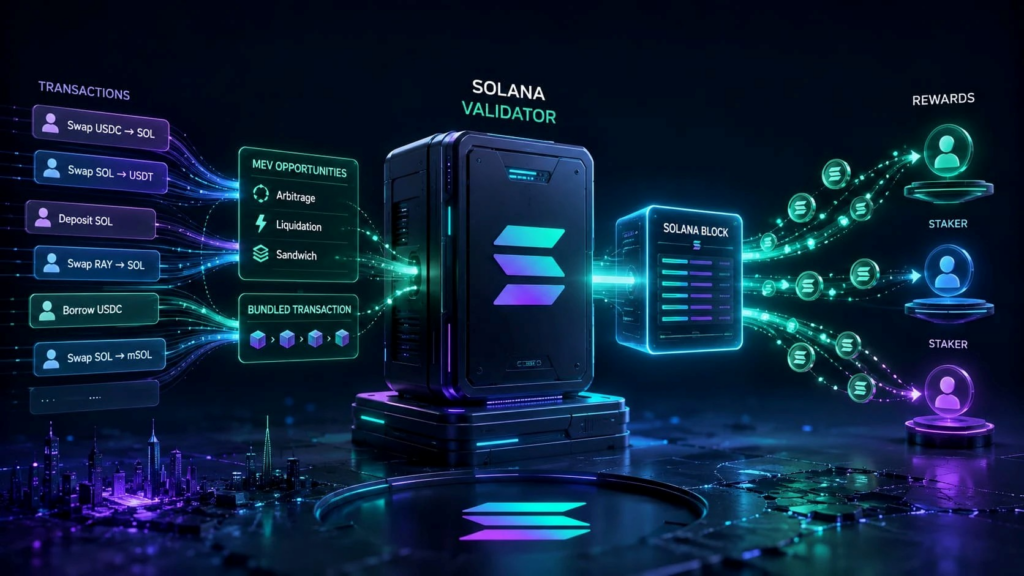 What Is MEV on Solana? Understanding Validator Rewards, Distribution, and Their Role in Staking
 -
How Great Ecommerce Web Design Improves Customer Experience
-
YouTube Advertising: The Complete Guide to Growing Your Business in 2026
-
 What Is Website Development? A Complete Guide for Beginners (2026)
 -
 SEO Website Testing: The Complete Guide to Improving Rankings, Performance, and User Experience

