
Competitive Benchmarking: What It Is, Why It Matters, and How to Do It Right in 2026

If your competitors are growing faster than you, it’s not luck.
It’s measurement.
And most businesses don’t lose because they lack effort — they lose because they don’t track themselves against the right benchmarks.
That’s where competitive benchmarking comes in.
In today’s AI-driven marketing environment, benchmarking isn’t optional. It’s how you understand your position, identify gaps, and build strategies that actually outperform the market.
Let’s break it down properly.
What Is Competitive Benchmarking?
Competitive benchmarking is the process of comparing your business performance, marketing metrics, and strategic positioning against your competitors to identify gaps, strengths, and growth opportunities.
It goes beyond just observing competitors.
It’s about tracking measurable performance indicators over time.
It’s about tracking measurable performance indicators over time.
In simple words:
Competitive analysis = studying competitors.
Competitive benchmarking = measuring yourself against them consistently.
Competitive benchmarking = measuring yourself against them consistently.
And that consistency is what creates competitive advantage.
Competitive Benchmarking vs. Competitive Analysis
These two terms often get confused, but they serve different purposes.
Competitive Analysis | Competitive Benchmarking
One-time or periodic deep research | Ongoing measurement process
Focuses on strategies and messaging | Focuses on measurable metrics
Qualitative insights | Quantitative comparison
Tactical insights | Performance tracking over time
One-time or periodic deep research | Ongoing measurement process
Focuses on strategies and messaging | Focuses on measurable metrics
Qualitative insights | Quantitative comparison
Tactical insights | Performance tracking over time
Think of it like this:
- Competitive analysis tells you what they are doing.
- Competitive benchmarking tells you how well you are performing compared to them.
Both matter. But benchmarking gives you long-term clarity.
Why Competitive Benchmarking Matters More in 2026
Search, ads, and digital marketing have changed.
AI tools, algorithm updates, personalization engines — everything is faster and more data-driven.
Here’s why benchmarking matters now more than ever:
1. Markets Are Saturated
You’re not just competing with 3 companies anymore. You’re competing with dozens.
2. SEO Is Authority-Based
Google favors domains that demonstrate topical authority and consistent growth signals.
If your competitor’s traffic is growing 25% quarterly and yours is flat — that’s a red flag.
3. Performance Marketing Is Competitive
CPC, CPM, and ad costs depend on competitor activity. Benchmarking helps you understand why your cost per lead is rising.
CPC, CPM, and ad costs depend on competitor activity. Benchmarking helps you understand why your cost per lead is rising.
4. AI Visibility Is Emerging
With AI summaries and answer engines, brands that consistently show authority win more exposure.
With AI summaries and answer engines, brands that consistently show authority win more exposure.
Benchmarking helps you see if you’re gaining or losing digital visibility.
Types of Competitive Benchmarking
There are three primary types businesses should understand:
1. Performance Benchmarking
This focuses on measurable outcomes such as:
This focuses on measurable outcomes such as:
- Website traffic
- Conversion rates
- Lead generation
- Customer acquisition cost
- Revenue growth
- Keyword rankings
- Share of voice
This is the most common type used in digital marketing.
2. Strategic Benchmarking
This compares:
This compares:
- Business models
- Pricing structures
- Market positioning
- Content strategy
- Distribution channels
This is more long-term and helps with strategic shifts.
3. Process Benchmarking
This looks at:
This looks at:
- Customer onboarding process
- Sales funnels
- Campaign structures
- Ad targeting models
- Email automation flows
Here, you’re not just measuring results — you’re comparing execution quality.
Key Metrics to Benchmark in Digital Marketing
If you’re running a digital marketing agency or scaling your brand, these are critical:
If you’re running a digital marketing agency or scaling your brand, these are critical:
SEO Metrics
- Organic traffic growth rate
- Keyword position distribution
- Backlink profile strength
- Domain authority comparison
- Indexed pages
Paid Media Metrics
- Cost per click (CPC)
- Cost per acquisition (CPA)
- Click-through rate (CTR)
- Return on ad spend (ROAS)
Content Performance
- Blog traffic per post
- Engagement time
- Scroll depth
- Bounce rate
Brand Signals
- Branded search volume
- Social engagement
- Online reviews
- Mentions across platforms
The goal is not to copy competitors — it’s to identify performance gaps.
How to Conduct Competitive Benchmarking (Step-by-Step)
Here’s the actionable framework:
Here’s the actionable framework:
Step 1: Identify Real Competitors
Not just who you think your competitors are — but who ranks for your target keywords.
Not just who you think your competitors are — but who ranks for your target keywords.
Use tools to check SERP competitors.
Step 2: Define KPIs
Decide what you’re benchmarking:
- Traffic?
- Leads?
- Ad efficiency?
- Engagement?
Clarity prevents data overload.
Step 3: Collect Data
Use tools like:
- Google Analytics (for your own metrics)
- SEO tools for traffic & keyword data
- Social analytics tools
- Ad platform insights
Track data monthly or quarterly.
Step 4: Analyze the Gap
Ask:
- Where are they outperforming us?
- Is it content depth?
- Is it backlinks?
- Is it paid spend?
- Is it UX?
This is where strategy is born.
Step 5: Create an Action Plan
For example:
For example:
If competitor has:
- 150 ranking blogs
- Strong backlink profile
- High internal linking structure
Your plan becomes:
- Publish 3 optimized blogs per month
- Build backlinks strategically
- Strengthen content clusters
Benchmarking without execution is useless.
Common Mistakes to Avoid
❌ Copying Strategy Blindly
What works for them may not align with your positioning.
❌ Tracking Too Many Metrics
Focus on metrics tied to revenue.
❌ One-Time Benchmarking
This is not a one-time report. It’s an ongoing system.
This is not a one-time report. It’s an ongoing system.
❌ Ignoring User Experience
Traffic without engagement doesn’t convert.
Competitive Benchmarking Tools You Can Use
- SEO research platforms
- Website traffic estimators
- Social listening tools
- Google Analytics & GA4
- CRM performance dashboards
Each tool gives part of the picture — combine insights for full clarity.
Real-World Example
Imagine:
Competitor A:
- 80K organic visits per month
- 250 ranking keywords
- 4.2% conversion rate
Your business:
- 35K organic visits
- 110 ranking keywords
- 2.1% conversion rate
The data immediately shows:
- You need more content
- You need stronger keyword coverage
- You need CRO optimization
Benchmarking makes your weaknesses visible — and measurable.
Final Thoughts
Competitive benchmarking isn’t about obsessing over competitors.
It’s about understanding your position clearly enough to outgrow them strategically.
Businesses that track and adapt win.
Businesses that guess and react late struggle.
Businesses that guess and react late struggle.
If you’re serious about scaling your digital presence, benchmarking should be a core part of your growth strategy — not an afterthought.
Recent posts
-
 Best AI Tools in 2026: Which Ones Are Actually Worth Using?
 -
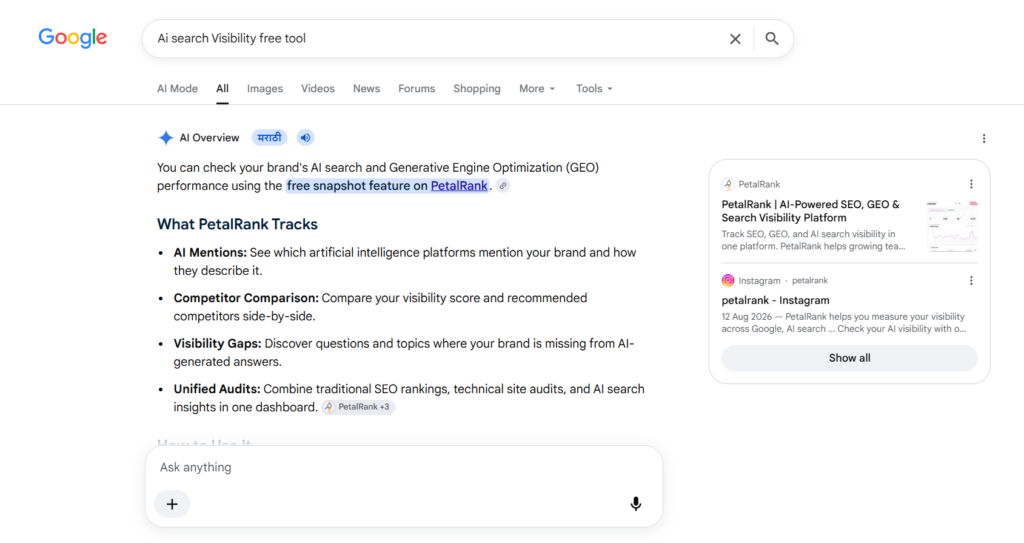 Google AI Overview insights: what 9 months of referral data reveal about traffic, citations and visibility
 -
 Local SEO in the AI search era: what businesses need to optimize now
 -
 Agent Digital Marketing: The Complete Guide to Growing Your Business Online
 -
 Search Optimization Services: Grow Your Business with Better Google Rankings
 -
 What Is MEV on Solana? Understanding Validator Rewards, Distribution, and Their Role in Staking
 -
How Great Ecommerce Web Design Improves Customer Experience
-
YouTube Advertising: The Complete Guide to Growing Your Business in 2026
-
 What Is Website Development? A Complete Guide for Beginners (2026)
 -
 SEO Website Testing: The Complete Guide to Improving Rankings, Performance, and User Experience

