
Struggling to Find Your Audience? Try These 7 Strategies
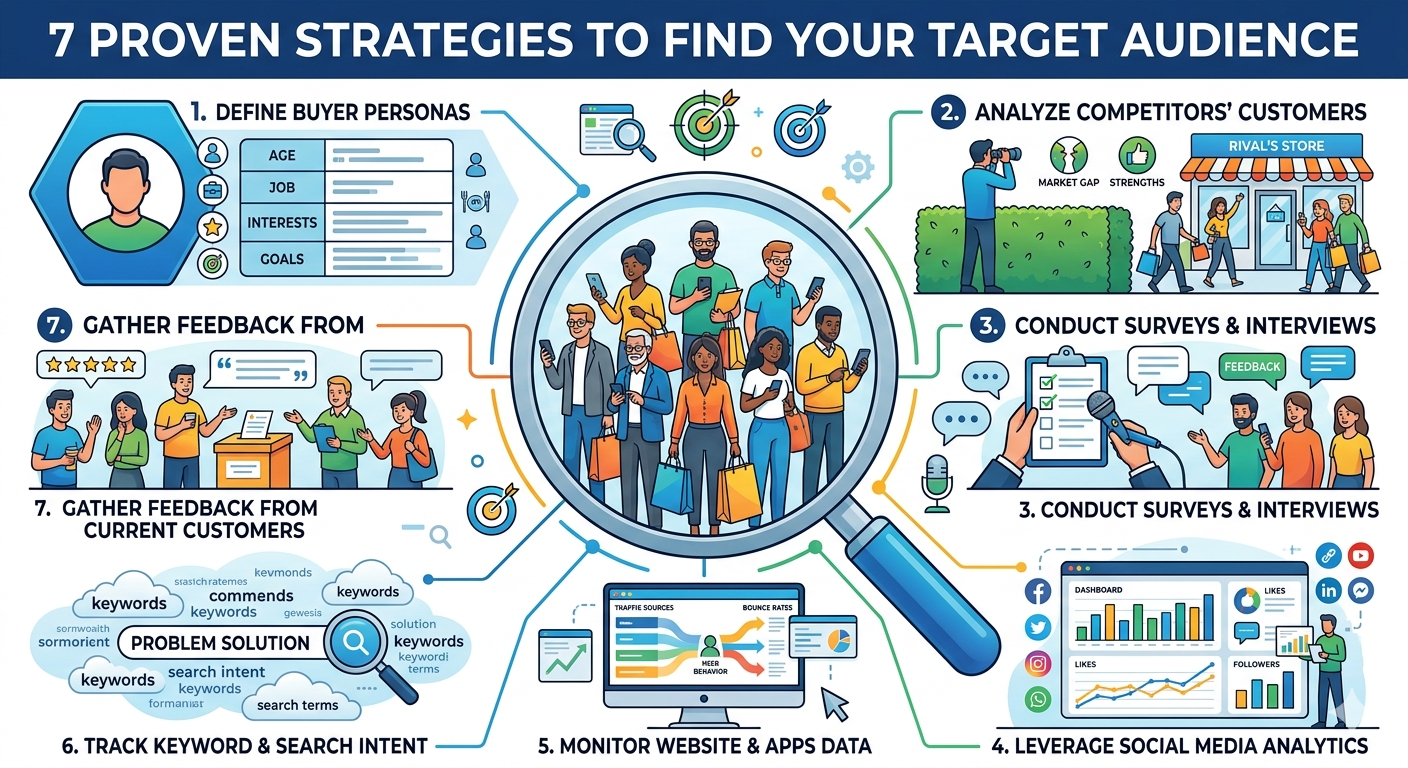
No matter how compelling your product or service is, you won’t grow if your message never reaches the right people. In today’s crowded digital landscape, simply “posting more” isn’t enough. To attract, engage, and convert customers, you must understand who your audience truly is — and where they spend their attention.
If you’re struggling to pinpoint or connect with your ideal audience, you’re not alone. The good news is that there are proven strategies to uncover insights, refine your targeting, and build stronger relationships with the people who are most likely to become loyal customers.
In this guide, we’ll walk through seven actionable strategies that help brands discover, understand, and reach their audience more effectively.
Understanding What “Finding Your Audience” Really Means
Before diving into tactics, it helps to clarify what “finding your audience” involves. At the most basic level, it’s about identifying the group of people who are most likely to:
- Need your product or service
- Engage with your brand messaging
- Convert into paying customers
- Become repeat buyers or advocates
This goes beyond surface-level demographics like age or location. It includes motivations, preferences, behaviors, and the contexts in which people interact with content. The better you understand these elements, the more tailored and impactful your outreach becomes.
Why Discovering Your Audience Matters
Knowing your audience is essential because it influences nearly every part of your marketing strategy — from the channels you choose to the language you use and the value propositions you highlight.
When you truly understand your audience:
- Your messaging becomes more relevant
- Your campaigns achieve higher engagement rates
- You avoid wasted ad spend on uninterested groups
- Customer retention increases over time
In short, audience insight turns scattered marketing efforts into targeted, efficient strategies that drive measurable results.
1. Dive Into Analytics to Reveal Audience Behaviors
Many brands overlook the depth of data already available inside their analytics platforms.
Many brands overlook the depth of data already available inside their analytics platforms.
Tools like Google Analytics, social platform insights, and CRM dashboards contain rich information about how users behave on your site and across channels. Look for patterns in:
- Pages visited
- Session duration
- Traffic sources
- Conversion paths
By analyzing this data, you can begin to see not just who is visiting your platforms, but how they interact with your content — which can lead to better segmentation and personalization.
2. Conduct Surveys and Ask Directly
Sometimes the best way to understand your audience is to ask them.
Surveys — whether through email, website popups, or social media — give you first-hand insights into customer preferences, challenges, and motivations. Questions can be simple, such as:
- What problem brought you here today?
- What do you find most valuable about this product or service?
- What stopped you from converting?
These insights help you refine messaging, identify common pain points, and uncover new opportunities that data alone may not reveal.
3. Monitor Conversations Across Social Channels
Social listening isn’t just about counting mentions. It’s about understanding tone, sentiment, and context.
By monitoring how people talk about your brand — and your industry — on Twitter, LinkedIn, Reddit, TikTok, and niche forums, you can identify:
- Trending topics relevant to your audience
- Language your audience uses to describe their problems
- Influencers and thought leaders they follow
- Emergent customer needs
This real-time feedback loop shows you not only what your audience cares about — but how they talk about it — which is invaluable for shaping content and ad messaging.
4. Analyze Competitor Audiences
Your competitors have likely already done much of the legwork when it comes to finding audiences that resonate in your niche. Study their:
- Community engagement
- Social media followers
- Comment threads
- Review sentiment
- Audience demographics (if available)
You don’t want to copy their strategy — but observing where and how your competitors succeed (or struggle) can reveal audience segments you may have overlooked.
5. Segment Your Customers Into Meaningful Groups
One of the biggest audience mistakes teams make is treating everyone as one monolithic group.
Instead, use segmentation to break your audience down based on meaningful criteria such as:
- Problem they’re solving
- Stage in the buyer journey
- Industry or job role
- Engagement patterns
- Purchase history
When you segment effectively, you can tailor messaging and offers that feel more personal — which boosts response rates and reduces cost per conversion.
6. Use Intent Signals and Behavioral Data
Beyond demographic traits, look at what people are doing — not just who they are. Behavioral data and intent signals include:
Beyond demographic traits, look at what people are doing — not just who they are. Behavioral data and intent signals include:
- Pages viewed
- Time spent on specific content
- Downloaded resources
- Abandoned carts
- Email engagement patterns
Tools that track this activity help you identify users who are close to making decisions, so you can tailor outreach accordingly. Instead of casting a wide net, you’re focusing on people who have already shown interest.
7. Test and Refine Through Targeted Experiments
Finding your audience isn’t a one-time task — it’s an ongoing process of experimentation.
Set up small experiments to test:
- Different audience segments
- Messaging variations
- Value propositions
- Creative formats
- Channel combinations
Track how each variation impacts engagement and conversions. Over time, you’ll build a clearer picture of what resonates best with your audience, allowing you to scale the strategies that work and ditch the ones that don’t.
Putting It All Together: A Roadmap to Audience Clarity
These seven strategies work best when combined into a coherent process:
- Gather data from analytics and surveys
- Listen to real conversations in the wild
- Study competitor audience behavior
- Segment customers into specific groups
- Use intent and behavioral insights to prioritize outreach
- Test messaging and audience combinations
- Refine and iterate based on performance
When you approach audience discovery as both an art and a science, your marketing becomes more targeted, efficient, and impactful.
Next Steps: From Awareness to Action
Understanding your audience is foundational, but it’s just the starting point. Once you know who your audience is and what they care about, you can:
- Create tailored content that speaks directly to their needs
- Build campaign strategies that deliver measurable results
- Personalize ad experiences that convert more cost-effectively
- Improve retention through ongoing relevance and engagement
Finding your audience isn’t a destination — it’s an ongoing cycle of learning, testing, and adapting.
Recent posts
-
 Best AI Tools in 2026: Which Ones Are Actually Worth Using?
 -
 Google AI Overview insights: what 9 months of referral data reveal about traffic, citations and visibility
 -
 Local SEO in the AI search era: what businesses need to optimize now
 -
 Agent Digital Marketing: The Complete Guide to Growing Your Business Online
 -
 Search Optimization Services: Grow Your Business with Better Google Rankings
 -
 What Is MEV on Solana? Understanding Validator Rewards, Distribution, and Their Role in Staking
 -
How Great Ecommerce Web Design Improves Customer Experience
-
YouTube Advertising: The Complete Guide to Growing Your Business in 2026
-
 What Is Website Development? A Complete Guide for Beginners (2026)
 -
 SEO Website Testing: The Complete Guide to Improving Rankings, Performance, and User Experience

