
How Retargeting Campaigns Bring Previous Visitors Back to Your Website
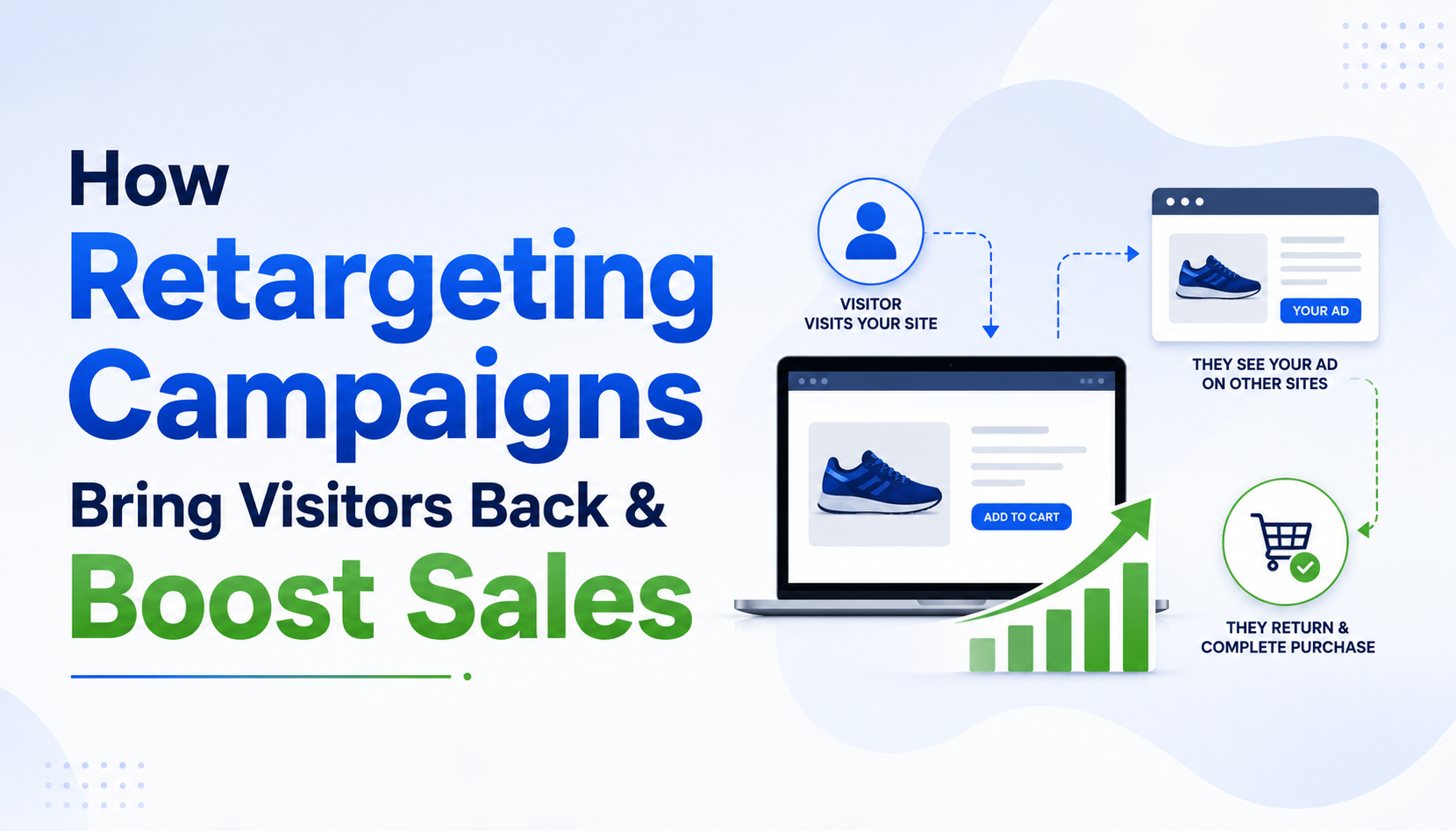
How Retargeting Campaigns Bring Previous Visitors Back to Your Website
A first-time visitor can leave without buying, booking, subscribing, or asking a question. That does not always mean the traffic was poor. People compare options, get interrupted, wait for payday, speak to a colleague, or simply decide that now is not the right moment.
The gap is especially visible in ecommerce. Baymard Institute’s current review of 50 studies puts the average documented online shopping cart abandonment rate at 70.22%. That figure only describes shopping carts, not every kind of website visit, but it shows how much high-intent activity can remain unfinished.
Retargeting gives you a sensible way to continue the conversation. It uses permitted website or app activity to place previous visitors into audiences, then shows relevant adverts while those people use other sites or platforms. The aim is not to chase everyone indefinitely. It is to remind the right person about the right next step while their interest is still fresh.
There is evidence that this can change return behaviour. In one experiment involving more than 230,000 visitors to an online retailer, retargeted advertising increased the likelihood of returning to the site by nearly 15%. That is a result from one retailer and should not be treated as a promise for every campaign. More usefully, the experiment showed why recency, exposure and audience intent deserve separate decisions.
A strong retargeting plan therefore starts before you design an advert. You need to decide which behaviours signal genuine interest, what message helps at each stage, how long that interest is likely to last, and when enough exposure becomes too much.
Behavior-Based Segments for Previous Visitors
Putting every previous visitor into one audience is like giving every person who entered a shop the same sales pitch. One may have glanced through the window, another compared three products, and a third reached the till. Their next questions are not the same.
Start by listing the actions that matter on your site. Useful signals might include viewing a product or service page, returning more than once, spending time with a pricing page, starting a checkout, downloading a buying guide, or visiting a contact page without submitting the form. These signals will not carry equal weight, so avoid treating a homepage visit as if it were an abandoned purchase.
Both Google and Meta support rules built around website activity. Google explains that a website visitor segment can combine actions, page or tag parameters, and exclusions with AND or OR logic. Meta’s website audience options can include or exclude people based on specific pages, visit frequency, device, time spent and tracked events. The exact controls vary by campaign type and may change, but the planning principle is stable: build audiences around meaningful differences in intent.
A simple starting map might look like this:
Visitor behaviour | Likely situation | Useful next message | Important exclusion |
Viewed one category or service page | Early exploration | Clarify the main benefit or selection criteria | People who bounced immediately, where practical |
Viewed several related pages or returned | Active comparison | Show proof, a comparison, a demonstration or a useful guide | Existing customers if the message is only for new buyers |
Visited pricing or started checkout | High commercial intent | Resolve a likely objection and return them to the exact next step | Completed purchasers or confirmed enquiries |
Purchased recently | Existing customer | Offer support, onboarding, replenishment or a relevant companion product | Anyone in a new-customer acquisition sequence |
Do not create ten tiny audiences just because the platform allows it. Very narrow groups take longer to populate, can limit delivery, and may create privacy or policy concerns if the targeting feels uncomfortably specific. Google’s personalised advertising policy also restricts advertiser-created audiences in sensitive-interest categories and warns against overly narrow targeting. Begin with a few distinctions that will genuinely change the message, then add detail when the data supports it.
Exclusions deserve the same attention as inclusions. Remove people who already completed the action, staff members, support visitors, irrelevant locations, and anyone whose consent does not permit personalised advertising. If you sell several unrelated services, also exclude visitors whose behaviour points to a different need. Cleaner audiences usually make the campaign easier to interpret.
Check the underlying setup before paying for impressions. Confirm that your page-view and conversion events fire once, that consent choices are respected, that completed customers leave the acquisition audience, and that every advert has a working destination. Before launch, a tool for managing traffic campaigns such as VisitorBoost, which sends real human visitors rather than automated bot hits, can help you test how landing pages, device variants and analytics reports handle a controlled flow of visits. Treat this as a systems check, not as a way to populate retargeting audiences, prove demand or inflate engagement figures.
Ads Matched to Previously Viewed Content
A generic retargeting advert is rather like phoning someone back without remembering what they asked about. They may recognise your company, but you have made them do all the work again. The better approach is to continue from the point they reached.
For an ecommerce visitor, that may mean showing the product category or item they viewed. For a software buyer, it could mean a short demonstration related to the feature page they read. A visitor to an accountancy service page may need a plain explanation of the process, while someone who reached pricing may need reassurance about what the fee includes.
Dynamic remarketing can automate part of this work. Google’s documentation says dynamic remarketing can show previous visitors adverts containing products or services they viewed, encouraging them to return and complete an action. It depends on accurate event data and a dependable product or service feed. If the advert shows an old price, an unavailable product or the wrong variant, relevance turns into frustration.
The destination matters just as much as the creative. Send a product viewer back to that product or a closely related collection, not to the homepage. Send a pricing visitor to the correct plan comparison, not to a broad brand story. Preserve selected options where possible, but never imply that a basket or reservation is still available unless your system can honour it.
Matching content does not mean revealing everything you observed. Copy such as “We saw you looking at this exact item last night” can feel invasive even when the targeting is technically permitted. A natural message such as “Still comparing waterproof walking boots?” provides useful continuity without announcing the tracking process. Good retargeting feels relevant, not watchful.
You also need more than one creative angle. A reminder may be enough for someone who was interrupted at checkout, but a visitor who compared options may need customer evidence, delivery information, a feature explanation or a clearer guarantee. Match the advert to a plausible unanswered question rather than repeating the same sales claim in different colours.
Before scaling, click every advert on desktop and mobile. Check loading time, stock, price, form behaviour, tracking parameters and conversion recording. Retargeting cannot repair a confusing landing page. It merely pays to bring people back to it.
Retargeting Windows Based on Visitor Recency
Interest cools like a cup of coffee. The exact pace depends on what you sell, but yesterday’s abandoned basket and a six-month-old homepage visit should not receive the same bid or message.
The Stanford retail experiment found that adverts shown in the first week after a visit were more effective than those shown later. Around one-third of the first week’s advertising effect occurred on day one, and half occurred in the first two days. That finding supports testing early contact, but it does not establish one perfect window for every business.
Begin with your normal decision cycle. A low-cost, frequently purchased item may justify a short high-intent window measured in days. A considered business service, expensive appliance or travel purchase may need several weeks because people compare suppliers, consult others or wait for an appropriate date. Past conversion data can show the typical time between first visit and purchase or enquiry.
Split the window where the message should change. You might treat days zero to three as an immediate reminder, days four to fourteen as a comparison period, and later visitors as a lower-priority group that receives educational proof rather than repeated checkout prompts. These are sensible test bands, not universal benchmarks. Adjust them using your own time-to-conversion and frequency data.
Platform retention limits should be seen as technical ceilings rather than marketing advice. Meta currently allows standard website audience rules to look back up to 180 days, and its audiences refresh as people enter and leave the selected period. Keeping someone eligible for six months does not mean their original interest remains strong for six months.
Recency also changes what you exclude. Remove converters promptly from acquisition messages, but consider moving them to a separate onboarding, replenishment or cross-sell audience where appropriate. Pause adverts for unavailable products and expired offers. If the visitor returns and performs a new high-intent action, let that newer behaviour determine the next sequence.
Review results by recency band rather than only at campaign level. Compare reach, cost, return visits, conversion rate and revenue or qualified enquiries for each window. A campaign can look profitable overall while older segments quietly consume budget. Shortening or lowering bids for those groups may improve efficiency without changing the creative.
Sequential Messages That Encourage Return Visits
Repeating one advert is like knocking on the same door with the same sentence. A sequence works differently. Each message earns the right to present the next useful piece of information.
A simple sequence can begin with recognition: show the category, service or task the visitor explored and offer a direct route back. The next message can add proof through a customer example, independent review, demonstration or clear comparison. A later advert can answer a common objection about price, delivery, setup, cancellation or support. An incentive, if you use one, should come after the value is clear rather than appearing automatically for everyone who leaves.
Not every platform guarantees that each person will see adverts in a perfect order. You can still approximate a sequence by combining recency audiences, exclusions and refreshed creative. For example, exclude the zero-to-three-day group from the four-to-fourteen-day advert set, and change the message as visitors move into the later window. Keep the logic simple enough to audit.
Frequency control prevents the sequence becoming a nuisance. Google allows frequency caps for Display and Video campaigns, with limits set across daily, weekly or monthly periods depending on the format. Other campaign types and platforms offer different controls, so confirm what is available before launch.
Three to five impressions per person per day can be tested for a brief, high-intent audience, but it is not a safe default for every campaign. For a small audience, a long buying cycle or a highly distinctive advert, even that may feel excessive. Watch frequency beside click-through rate, return visits, conversions, negative feedback and creative fatigue. If reach stays flat while impressions climb and response falls, reduce exposure or rotate the message.
Privacy is part of the experience, not a box to tick afterwards. The UK Information Commissioner’s Office says organisations must explain non-essential cookies clearly and obtain actively given consent before setting them, with particular care for behavioural tracking. Other markets have their own requirements, so check the laws that apply to the people you target. Your privacy notice, consent tool, platform settings and actual tag behaviour must tell the same story.
Avoid creative that exposes or implies sensitive personal information. Do not target so narrowly that an individual feels identified, and do not use retargeting to pressure vulnerable people. Honest copy, visible offer terms and an easy route to adjust privacy choices protect both the visitor and the campaign.
Finally, measure whether retargeting creates useful return visits rather than simply claiming conversions that would have happened anyway. Where volume allows, compare with an unexposed control group or use a platform lift test. At minimum, report results by audience behaviour, recency and message stage, and compare the value generated with media and creative costs.
Retargeting works best when it behaves like good customer service: it remembers the context, offers the next useful answer, and knows when to step back. Start with one or two high-intent segments, build a short message sequence, set firm exclusions and frequency controls, then expand only when the evidence justifies it. That is how previous visitors become welcome return traffic rather than a repeatedly chased audience.
Recent posts
-
 Best AI Tools in 2026: Which Ones Are Actually Worth Using?
 -
 Agent Digital Marketing: The Complete Guide to Growing Your Business Online
 -
 Search Optimization Services: Grow Your Business with Better Google Rankings
 -
 What Is MEV on Solana? Understanding Validator Rewards, Distribution, and Their Role in Staking
 -
How Great Ecommerce Web Design Improves Customer Experience
-
YouTube Advertising: The Complete Guide to Growing Your Business in 2026
-
 What Is Website Development? A Complete Guide for Beginners (2026)
 -
 SEO Website Testing: The Complete Guide to Improving Rankings, Performance, and User Experience
 -
 How Retargeting Campaigns Bring Previous Visitors Back to Your Website
 -
 Google’s local services ads update is about more than compliance. It’s about trust

