
Menu
Menu
Marketing & Sales Collaboration: Improving Lead Quality Together
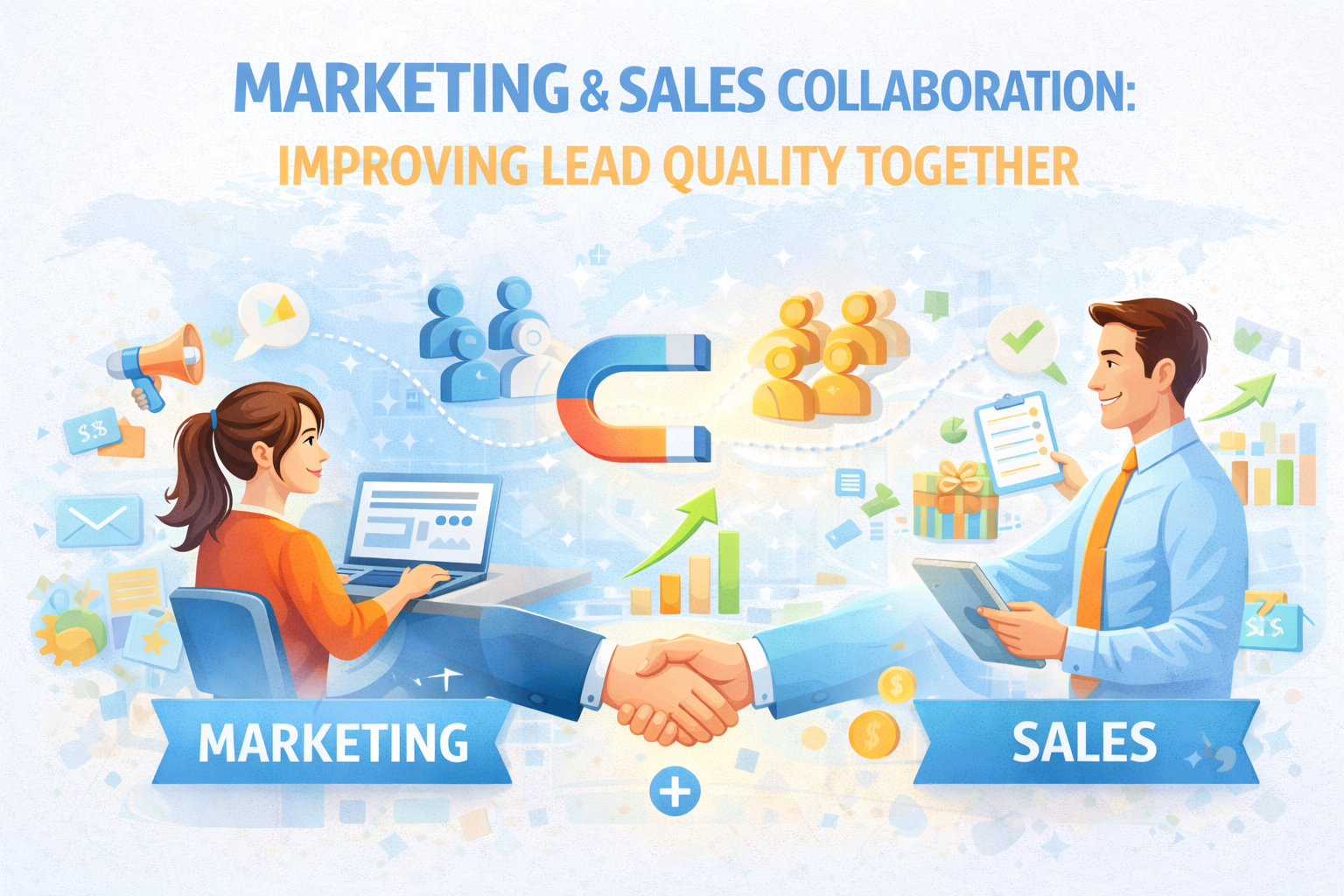
In many organizations, marketing and sales teams work toward the same ultimate goal: generating revenue. Yet these teams often operate in silos, with marketing focused on generating leads and sales focused on closing deals. When this disconnect happens, businesses often struggle with poor lead quality, wasted resources, and slower revenue growth.
True success happens when marketing and sales collaborate closely to define what a qualified lead looks like, nurture prospects effectively, and move them smoothly through the sales funnel. Understanding how marketing-qualified leads (MQLs) and sales-qualified leads (SQLs) function within the customer journey is a crucial step toward improving lead quality and overall business performance.
This guide explores how marketing and sales alignment can improve lead quality, increase conversion rates, and help organizations build a more efficient revenue pipeline.
Why Marketing and Sales Alignment Matters
Marketing and sales alignment ensures both teams work toward shared objectives rather than competing priorities. When these departments collaborate effectively, they can create a smoother transition from lead generation to conversion.
Misalignment often results in marketing generating leads that sales teams consider unqualified. Meanwhile, sales teams may ignore or undervalue leads that marketing believes have strong potential. By establishing shared definitions, communication processes, and measurable goals, organizations can improve both lead quality and conversion rates.
Ultimately, alignment reduces friction in the buyer journey and allows teams to focus on delivering meaningful value to prospects.
Understanding the Role of Qualified Leads
To improve collaboration between marketing and sales, it’s important to understand how leads progress through the funnel. Not all leads are equal; some are still exploring solutions, while others are actively evaluating purchase options.
Two common classifications help teams determine where a lead stands in the buying journey:
Marketing Qualified Leads (MQLs)
Sales Qualified Leads (SQLs)
These categories help teams determine when a prospect should transition from marketing engagement to direct sales outreach.
What Is a Marketing Qualified Lead (MQL)?
A marketing-qualified lead is someone who has shown interest in a company’s products or services but is not yet ready for direct sales engagement. These leads may interact with marketing content, download resources, attend webinars, or subscribe to newsletters.
Because MQLs are still exploring their options, they typically require nurturing through targeted campaigns and educational content. Marketing teams use behavioral signals—such as website visits, content engagement, or email interactions—to identify potential MQLs.
The goal at this stage is to deepen interest and guide prospects toward stronger buying intent.
What Is a Sales Qualified Lead (SQL)?
A sales-qualified lead represents a prospect who has demonstrated clear purchase intent and fits the company’s ideal customer profile. At this point, the lead is ready for direct interaction with a sales representative.
SQLs often emerge when prospects request product demonstrations, inquire about pricing, or engage in conversations with sales teams. Compared to MQLs, SQLs are closer to making a purchasing decision and require a more personalized sales approach.
Identifying SQLs correctly ensures sales teams focus their efforts on the most promising opportunities.
How Marketing and Sales Work Together to Improve Lead Quality
Improving lead quality requires collaboration at multiple stages of the customer journey. Marketing and sales teams must coordinate efforts to ensure leads are properly nurtured before reaching the sales team.
Here are several ways these teams can work together more effectively.
1. Agree on a Shared Definition of Qualified Leads
One of the biggest sources of conflict between marketing and sales is differing definitions of what constitutes a “qualified” lead.
Both teams should collaborate to define criteria such as:
Industry or company size
Budget and purchasing authority
Level of engagement with marketing content
Timing of purchase intent
Clear definitions help marketing focus on attracting the right audience while ensuring sales receives leads with genuine potential.
2. Establish a Lead Scoring System
Lead scoring assigns numerical values to prospect behaviors and characteristics. Actions such as downloading content, attending webinars, or visiting pricing pages increase a lead’s score.
Once a lead reaches a predefined threshold, it becomes eligible for handoff to the sales team. This scoring system ensures that marketing nurtures leads until they show meaningful intent.
3. Create a Structured Lead Handoff Process
The transition between marketing and sales must be clearly defined to prevent leads from falling through the cracks.
Organizations often use service-level agreements (SLAs) to outline expectations between teams, including response times, lead qualification criteria, and follow-up procedures.
When this process is transparent and standardized, both teams can focus on moving prospects forward rather than debating lead ownership.
4. Use Data and Analytics to Improve Targeting
Data-driven insights allow marketing and sales teams to understand which campaigns generate high-quality leads and which channels deliver the most conversions.
By analyzing engagement data, teams can refine targeting strategies, improve messaging, and prioritize leads with stronger purchase intent.
This feedback loop strengthens collaboration and ensures marketing efforts align with sales outcomes.
5. Maintain Continuous Communication
Regular communication between marketing and sales teams is essential for maintaining alignment.
Weekly meetings, shared dashboards, and collaborative planning sessions allow both teams to review lead quality, discuss campaign performance, and identify opportunities for improvement.
This ongoing dialogue ensures both teams stay aligned as strategies evolve.
Common Challenges in Marketing and Sales Collaboration
Even organizations that recognize the importance of alignment often encounter obstacles.
Some common challenges include:
Different performance metrics between teams
Limited communication or feedback loops
Misaligned expectations about lead readiness
Inconsistent lead qualification processes
Addressing these challenges requires leadership support and a commitment to shared goals.
Measuring Success in Marketing-Sales Alignment
Businesses that successfully align marketing and sales often track specific metrics to measure progress. These include:
Conversion rate from MQL to SQL
Lead-to-customer conversion rate
Average sales cycle length
Revenue generated from marketing-sourced leads
Customer acquisition cost (CAC)
Tracking these metrics helps teams evaluate whether collaboration efforts are improving lead quality and revenue outcomes.
Best Practices for Building Stronger Collaboration
Organizations looking to strengthen collaboration between marketing and sales should focus on several key practices:
Develop shared revenue goals rather than separate departmental targets
Invest in integrated CRM and marketing automation tools
Encourage cross-team collaboration during campaign planning
Share performance insights regularly
Celebrate joint wins that demonstrate successful alignment
These practices reinforce the idea that both teams are working toward the same objective: generating sustainable revenue growth.
Moving Toward a Unified Revenue Strategy
Modern businesses can no longer afford disconnected marketing and sales functions. Buyers expect personalized experiences and seamless interactions throughout their purchasing journey.
By aligning marketing and sales around shared goals, clear lead definitions, and collaborative processes, organizations can significantly improve lead quality and conversion performance.
When these teams work together effectively, the result is a more efficient sales funnel, stronger customer relationships, and sustainable business growth.
Recent posts
-
 Brand Equity Strategies for Business Growth
 -
 How to Increase Click-Through Rate
 -
 Display Ads: Benefits & Use Cases
 -
 Competitive Benchmarking: What It Is, Why It Matters, and How to Do It Right in 2026
 -
 35 Powerful Ways to Generate High-Quality B2B Sales Leads in 2026
 -
 What Is Demographic Segmentation? A Beginner’s Guide for Marketers
 -
 How Targeted Advertising Improves ROI? A Practical Guide for Modern Marketers
 -
 20 Smart Social Media Hacks That Actually Work
 -
 How Much Do Social Media Ads Cost? Platform-by-Platform Guide
 -
 What Is Integrated Marketing & Why Does It Matter?

